

Ever wonder what your guests really think after dining with you? Exchanging pleasantries at the table only scratches the surface, and public review sites tend to attract the highly satisfied and the highly dissatisfied, with little in between.
A good restaurant survey covers six things: the overall visit, the food, the service, the ambiance, the reservation process and any takeout order. Keep it to five to eight questions, send it by email within 24 hours of the visit and mix rating scales with one open-ended question.
Ask the right questions and let guests answer privately and you get the version of the night they would never post online. That is the feedback you can fix next Friday’s service with, and collecting it is what restaurant guest feedback software is built to do
Proactive, post-meal feedback questionnaires are your key to elevating your restaurant reputation. Time them appropriately, and you’ll gain actionable insights into your menu, service and ambiance, directly impacting guest satisfaction.
Ready to move beyond assumptions and truly understand your diner's journey? We’ve compiled 66 restaurant survey questions to help you get the most out of your restaurant questionnaire.
Why is guest feedback important to restaurants?
Guest feedback is important to the restaurant business because it helps you understand what your guests are thinking so you can improve your service, menu and overall dining experience.
- It provides valuable insights into customer preferences. From portion sizes to wait times to noise level, asking the right restaurant survey questions helps you improve and refine guest experiences.
- It helps you resolve issues quickly. A survey sent within hours of the visit gives you the complaint before the internet does. The margin for a bad night keeps shrinking. According to BrightLocal Consumer Review Survey 2026, 31% of consumers now say they will only use a business rated 4.5 stars or above, up from 17% in 2025, so a single unanswered complaint moves you under the line faster than it used to.
- It encourages natural feedback. Public review sites only tell part of the story and the reviews can be polarizing, which is why restaurant reputation management starts with what guests tell you directly.
Restaurateurs who only scour third-party review sites for customer insights are leaving valuable feedback on the table because it can be skewed or fake. To truly understand your guests, you need a more thorough review collection and management process.
SevenRooms’ 2025 U.S. Restaurant Industry Trends report found that while 59% of operators rely on third-party reviews to gauge guest perception, operators are increasingly turning to feedback surveys (56%) and guest sales data (53%) for a more accurate view of brand sentiment.
How to measure customer feedback with email
There are a few ways to collect guest feedback: QR codes on tables or receipts, printed comment cards, post-dining conversations with a server who is already behind. Email beats all of them.
Restaurant email marketing takes the friction out. No login, no QR scan, no answering to someone’s face while they wait. Guests reply on their own time, which is why those replies are longer and more specific.
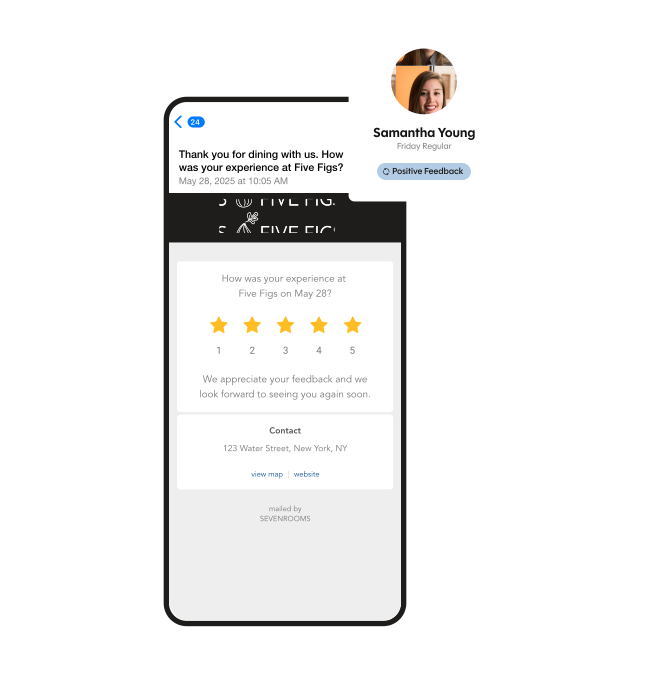
Automated surveys sent by email gather insights and surface problems before they reach a public review site. They also standardize across venues and service periods, so a Tuesday lunch in one room is measured the same way as a Saturday dinner in another.
Restaurant survey options
There are two main approaches to restaurant surveys: Standardized feedback surveys using star or scale ratings with the option of leaving a comment, and customizable formats with varied, open-ended questions.
Standardized surveys are great for collecting consistent, scalable insights. They often use rating scales such as “on a scale of 1 to 5…” or “How would you rate…” to help measure performance and identify trends over time.
For those looking to dig deeper on certain areas, use a mix of multiple-choice and open-ended formats to encourage detailed feedback on everything from food and drinks to service quality and ambiance.
If you want the open-ended approach, below are 66 restaurant survey questions, organized into six categories: overall experience, food, service, ambiance, reservations and takeout.
66 restaurant survey questions you should ask your guests
Restaurant survey questions about the overall experience:
These questions pertain to your guests’ overall restaurant experience. If you don’t pose any other questions, make sure you ask these.
- Overall, how would you rate your dining experience? (1 to 5)
- How likely are you to recommend us to a friend or colleague? (0 to 10)
- Was this your first time at the restaurant?
- How did you hear about the restaurant?
- What was the best part of your visit?
- What was the worst part of your visit?
- How far did you travel to visit us today?
- Do you think our restaurant is family-friendly? (Can substitute for another qualifier, such as group-friendly, romantic, upscale?)
Food related restaurant survey questions
Food is the primary reason why people dine out. Make sure your menu is the best it can be by soliciting customer feedback about your drink and food quality with these questions.
- What did you order?
- Did you order alcoholic beverages?
- How would you rate the overall quality of your meal?
- Do you think our menu offers value for money?
- What was the best part of the meal?
- What was the worst part of the meal?
- How would you rate the freshness of the food?
- How would you rate the presentation of your food?
- How would you rate the variety of the menu items?
- How would you rate the portion sizes of your food?
- What did you think of the menu options?
- How well does the menu accommodate your preferred dietary preferences?
- How well did we accommodate your dietary restrictions, requests or order modifications?
Service related restaurant survey questions
Service can make or break a dining experience. Ask these questions in your restaurant surveys to understand how your front-of-house team is doing and how their performance can be improved.
- Did the host greet you upon arrival?
- How long did you have to wait before being seated at your table?
- Who was your server?
- Was your server able to explain the menu and answer your questions?
- How would you rate the attentiveness of your server?
- How would you rate the friendliness of the staff?
- Did your server anticipate your needs?
- Did your server make recommendations?
- How satisfied are you with the speed of service (fast or slow)?
- Were your courses timed appropriately?
- Did bussers clear the table between courses?
- Was water refilled in a timely manner?
- Did you get new silverware between courses?
- Did the manager visit your table and conduct a satisfaction check?
- How likely are you to dine with us again based on the service you experienced?
Ambiance related restaurant survey questions
When you’re close to the business, it’s easy to take your ambiance for granted — or let the little things go unnoticed. Ask these questions to understand what your guests think of your restaurant’s atmosphere.
- In three words, please describe the ambiance of our restaurant.
- Was the space welcoming?
- Was the space clean and organized?
- How would you rate the noise level of the space?
- If you visited the restrooms, were the facilities clean and well-stocked?
- If you require accommodations for a disability, was the space accessible to your needs?
- How comfortable were the seats in the restaurant?
- How would you rate the temperature in the restaurant?
- How would you rate the decor in the restaurant?
- How would you rate the parking area?
Restaurant reservations survey questions
Making reservations and collecting booking details is an important part of the overall dining experience, especially since diners who prebook tend to be repeat visitors or part of your loyalty program. Here are a few questions to ask guests who book a reservation in advance.
- Did you make a reservation for your visit?
- What platform did you use to make a reservation?
- How easy was it to make a reservation?
- How long did it take you to make a reservation?
- Did you receive a reservation confirmation prior to your visit?
- Did you receive a reservation reminder prior to your visit?
- How accommodating was the reservation platform for communicating any special requests or preferences you had for your reservation?
- Did you have to wait for a table upon arriving at the restaurant? If so, how long?
- How likely are you to make a reservation with us again in the future?
Online ordering & takeout related restaurant survey questions
It’s important to gauge the impact of your off-premises dining experiences by asking the following questions.
- How easy was it to place a takeout order?
- How did you place this order (online or by phone)?
- How long did it take you to place the order?
- How long did you have to wait for your food to be ready?
- Was our staff courteous and friendly during pickup/delivery?
- How could we improve our takeout/food delivery offering?
- Did the food arrive on time?
- How would you rate the food quality at delivery?
- Was your food warm when it arrived?
- How would you rate the freshness of the food in your order?
- How satisfied were you with the taste of the food?
- Are you satisfied with our online ordering system?
Automate the survey and standardize what comes back
For a more standardized approach to surveys, SevenRooms review management software asks diners for feedback automatically after every visit, and AI Feedback Summary turns what comes back into a short read your managers can act on before the next service.
With templates and scheduling tools, you can gather feedback immediately following on- or off-premise experiences, when guests are most likely to respond. Feedback is then aggregated into a reputation management dashboard so you can easily spot and identify trends.
What’s more, SevenRooms’ customer relationship management (CRM) system will link feedback to each guest’s profile, helping your entire team influence service during every visit.
Using guest tags, you can label diners based on their review history and dining preferences to further personalize your interactions. For example, you could treat guests who raved about your chocolate cake to a slice on the house, or ensure that a guest who thought your chicken was too spicy receives a milder version on their next visit.
Learn how Gosford RSL uses SevenRooms’ AI and automation to send survey emails and stop bad reviews before they happen.
“With automated emails, we started proactively asking diners for feedback. Whenever we received a negative response, we addressed it immediately to try and transform that feedback into a positive outcome. This feedback was crucial in helping us correct our mistakes. It’s a safety net where if a guest goes home unhappy, they let us know before posting on Google. It’s helped us improve our score.” - Andrew Strickland, the F&B Manager at Gosford RSL
Ask better questions, keep more guests
A list of questions is only useful if the answers reach the people working the floor.
SevenRooms sends the survey, summarizes what comes back and attaches it to the guest profile, so your team walks into service already knowing who to look after.
Restaurant survey questions FAQs
How do you create or execute a restaurant survey?
Start with the questions, then pick the channel. You can run a survey from QR codes on table cards, an email link or a social poll, and track the answers in a spreadsheet if you are starting with one room.
Above a single venue that stops working. Use automated feedback surveys, like the ones SevenRooms sends, so requests go out on a schedule and come back as daily guest feedback summary emails.
How do you get customers to leave reviews?
The best way to get customers to leave reviews is by making reviews part of your in-person engagement strategy, especially with regulars. Send post-meal feedback surveys using templates via SevenRooms to find out what guests are really thinking. Social media and online reviews are other excellent ways to engage customers. It is essential to reply to online reviews to satisfy customers and make them feel connected to your restaurant.
How many questions should a restaurant survey have?
Five to eight for a standard post-visit survey. Response rates fall away past ten, and a guest who abandons halfway gives you nothing at all.
Run the short version as your default and save the full list for a one-off deep dive, after a menu change or a new service model, when guests have a reason to spend longer.
When should you send a restaurant survey?
Within 24 hours of the visit, while the guest can still remember which server they had and what the room sounded like. Wait a week and you get a star rating with nothing attached to it.
An automated email triggered by the completed reservation handles the timing, so nobody on your team has to remember to send it.
