
Last-minute cancellations and no-shows are costly problems for restaurants. Guests who ghost, or change their minds on a whim, can greatly affect revenue. This issue is why many restaurants implemented cancellation fees in the wake of the COVID-19 pandemic, and continue to enforce them today.
Now, high-demand venues also have bots to deal with, leading even more restaurants to charge cancellation fees. These pesky software applications make reservations in bulk with the intent to sell them, leaving human guests in search of a seat out of luck.
While cancellation fees solve multiple problems for restaurants, they can also create some.
In recent years, high cancellation fees have led to controversy for some restaurants, sparking public outrage from guests.
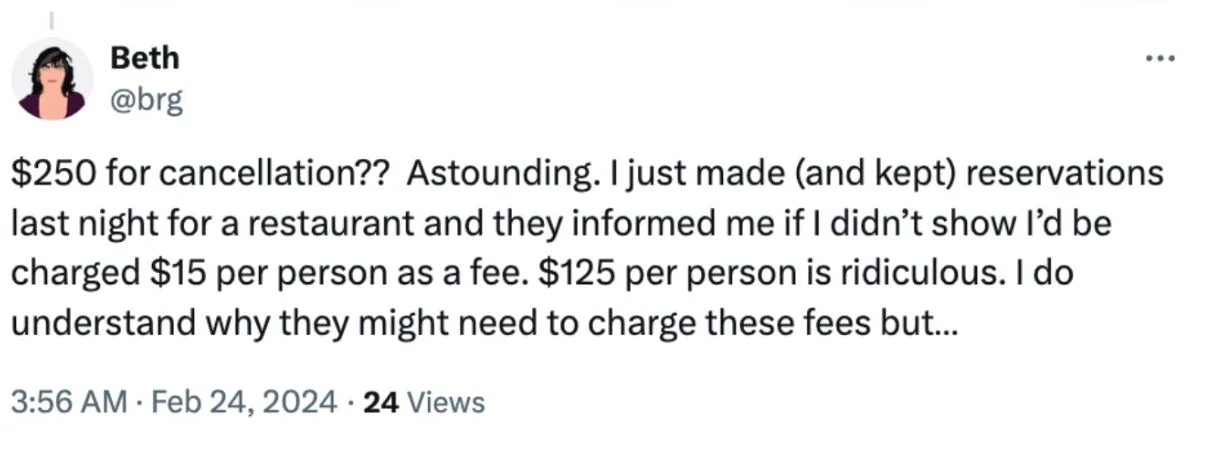
Customer viewpoints aside, heated debates on social media about who was in the right highlight the importance of implementing a cancellation policy with fair, flexible terms. While all guests will never agree on whether cancellation fees are necessary, that doesn’t change the fact that you have a restaurant to protect and operating costs to consider.
Fees are also less common than the headlines suggest. Only 22% of U.S. venues on SevenRooms charge a cancellation fee, according to our 2025 U.S. Restaurant Industry Trends Report, so a fair, well-explained policy can still set you apart rather than put guests off.
That’s why it’s essential to strike the right balance when determining a cancellation fee that mitigates risk without affecting guest satisfaction. Keep reading to learn how to create a fair restaurant cancellation fee policy without upsetting or losing diners.
How restaurant reservation cancellation fees work
A restaurant reservation cancellation fee is a charge a guest pays when they cancel after the deadline in your policy or don’t show up at all. Unlike a reservation deposit, which the guest pays when they book, a cancellation fee is only charged if the guest misses that deadline.
- At booking: The guest sees your cancellation policy, agrees to it and leaves card details. Nothing is charged at this point.
- Before the deadline: The guest can change or cancel without paying anything. The deadline is up to you: The Drake in Toronto gives large parties until 48 hours before the reservation, while Katsuya Baha Mar sets a 4 p.m. cutoff on the day.
- After the deadline or on a no-show: The restaurant charges the card on file, either a set amount per person or a flat fee for the booking.
Fees work best on the bookings that cost the most when they fall through, such as large parties, holidays and peak shifts. The sections below cover what other restaurants charge, how to set your own amount and how to write a policy guests will accept.
Average U.S. restaurant cancellation fees
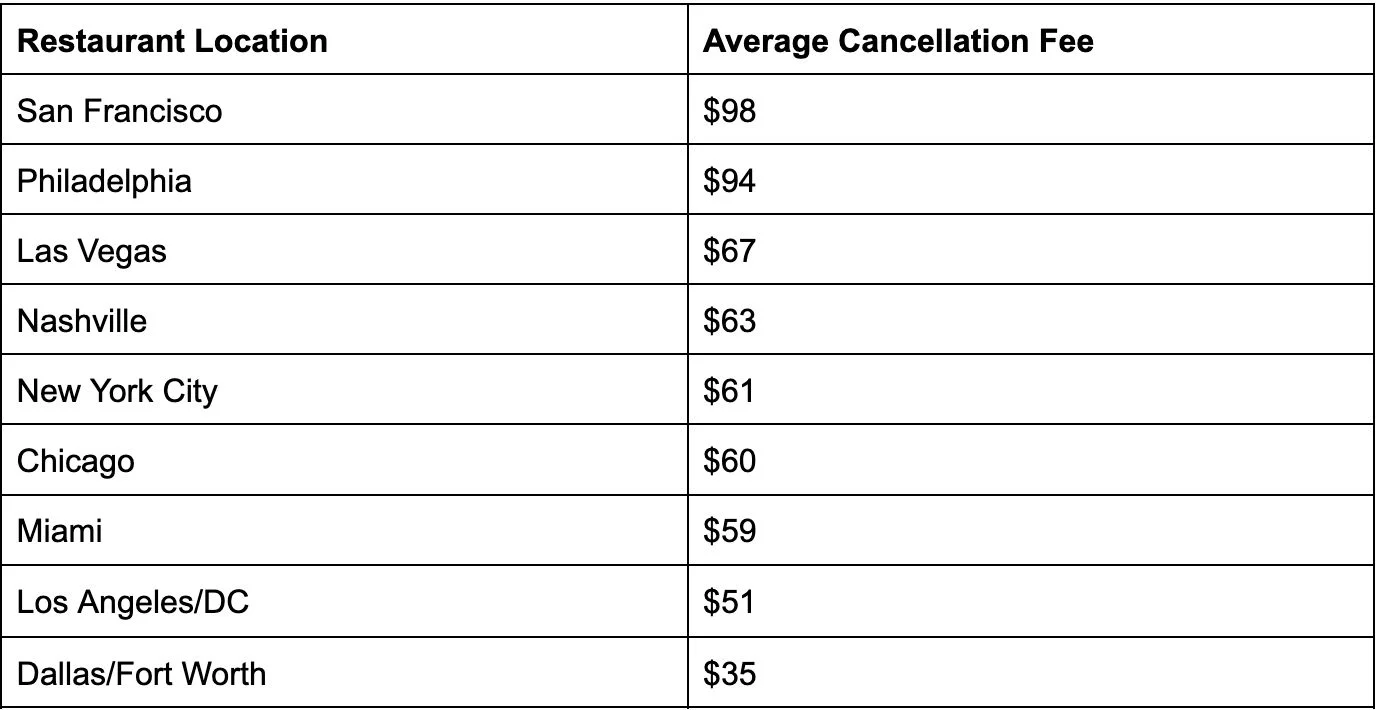
When deciding what to charge guests, using other restaurants as a benchmark can be helpful. However, reservation cancellation fees vary widely based on the type of establishment and location.
According to SevenRooms’ 2025 U.S. Restaurant Industry Trends Report, the average cancellation fee at U.S. venues on SevenRooms is $52. That figure covers the venues that charge a fee at all, which is only about one in five.
Fees also vary by city. Here’s how they compared in SevenRooms client data from Q4 2023:
How to decide what to charge restaurant guests
Here’s where things get tricky. You want to charge enough to deter guests from canceling or no-showing but not so much that you turn them off. (Or incite angry tweets.)
So, don’t settle for an arbitrary number. Base the cancellation fee on hard data. Here’s how you can choose a strategic number that works for your restaurant:
Evaluate the impact of past cancellations
Start by analyzing historical data to understand the impact of past cancellations on your restaurant's revenue and operations. Factor in potential revenue loss from unfilled tables and wasted resources, such as staffing, food preparation and table setup.
The following tools can provide you with valuable data:
- Reservation management software: Tracks booking patterns, cancellations and no-show rates.
- POS system: Helps analyze revenue lost due to cancellations and no-shows.
- Customer relationship management (CRM) system: Tracks customer behavior, including reservation history, cancellations and preferences. This can help you predict future cancellations and understand their impact.
While you may already have some of the above software, integration is key. Look for an all-in-one CRM and reservation solution that integrates with your POS system to get a comprehensive, aggregated view of cancellation data.
If you haven't chosen that solution yet, see the best restaurant reservation systems for enforcing deposits and cancellation policies.
This will help you easily assess the impact of cancellations and measure the success of your policy.
Consider peak and off-peak periods
Evaluate the impact of cancellations during peak versus off-peak hours and use this data to inform your cancellation policy. For example, if Tuesdays are notoriously slow but your Sunday brunch is always sold out, skip the blanket cancellation fee.
Instead, implement a fee for peak periods only to cover your busiest times. This way, guests can choose time slots without fees and you still see a reduction in cancellations on your restaurant’s most popular days.
Consider choosing a per-person or flat fee
Determine a cancellation fee that feels reasonable and comfortable based on your typical reservation value. Depending on your restaurant’s popularity and average order value, you might charge 20% to 30% of the typical order amount, making your fee anywhere from $10 to $100+ per person.
For example, if your average weekend reservation for a party of four is $250, a fee of 20% to 30% works out to $50 to $75 for the table, or roughly $15 per person.
Japanese restaurant and SevenRooms client Katsuya Baha Mar charges $100 per adult and $50 per child for cancellations made after 4 p.m. The cancellation policy is displayed in multiple places throughout the booking process, so guests can’t miss it.
![Katsuya Baha Mar booking widget showing a no-show fee of $100 per adult and $50 per child for cancellations after 4 p.m.]](https://cdn.builder.io/api/v1/image/assets%2Facabda4a1104467f93cbad15a924c9a3%2F4106d8bc5b0d45beacd9383144db92ef?format=webp)
Alternatively, a flat fee, like $50 or $100, simplifies administration but may not accurately reflect the revenue impact of cancellations involving larger groups.
6 tips for an effective (and fair) cancellation fee policy
Implementing and enforcing restaurant cancellation fees is a balancing act. But with clear communication and the right tools, you can keep guest satisfaction high and reduce cancellations.
1. Set reasonable terms
While the goal is to reduce cancellations and no-shows, you also don’t want to risk turning off diners. Give guests a fair grace period where they can cancel without penalty.
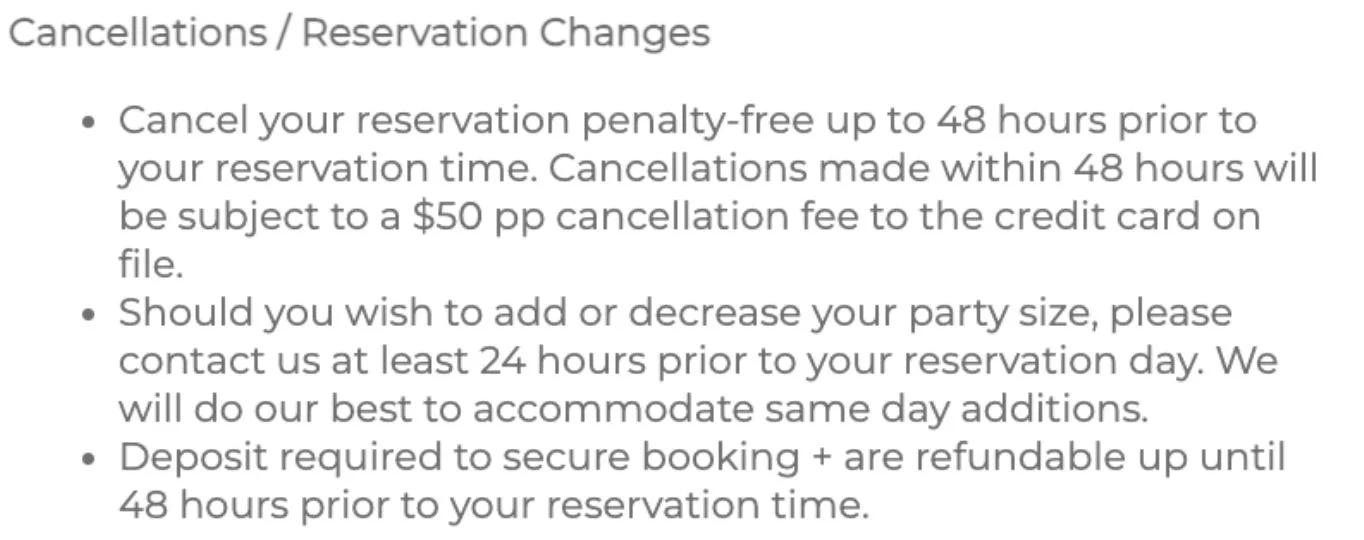
For example, large parties can cancel their reservations at The Drake in Toronto, Ontario, up to 48 hours before the reservation. After that, they’ll be charged $50 per person. The restaurant uses SevenRooms’ booking widget to clearly display its policy to guests.
2. Allow for some wiggle room
While there will always be guests who claim some sort of dog-ate-my-homework scenario, be prepared to waive fees in genuine emergencies or unforeseen circumstances. And ensure all staff uphold this policy.
A little empathy goes a long way toward maintaining guest loyalty and keeping online reviews positive.
Encourage guests to call or email if these circumstances occur. This is also when CRM data comes in handy. SevenRooms’ CRM lets you create custom tags so you can mark guests as “frequent no-shows/cancellations.” This enables you to identify repeat offenders quickly.
Pull up guest history when they call. If an “emergency” has happened multiple times before, you might not grant the refund. If it’s their first time, consider letting it slide.
3. Frame your policy in a positive light
Negative language encourages a negative response. Instead of emphasizing penalties, which can turn off guests, explain how honoring reservations benefits the guest and restaurant.
For example:
- "We appreciate your commitment to your reservation, as it helps us deliver exceptional service to you and all our guests."
- "Timely cancellations assist us in efficiently allocating resources and serving all our guests effectively."
- “Our dedicated team prepares diligently based on reservations. Cancellations disrupt this preparation and impact our staff's schedules and workload. Thank you for your understanding.”
4. Clearly communicate your policy
The more places you highlight your cancellation policy, the better.
This includes:
- Your website
- Reservation form
- Social media profiles
- Email and SMS confirmations
- Event landing pages
- Menus
Prominently displaying your cancellation policy in multiple spots is just the start. Having guests agree to your policy when booking a table will help protect you in cases where diners claim they didn’t know about the fee.
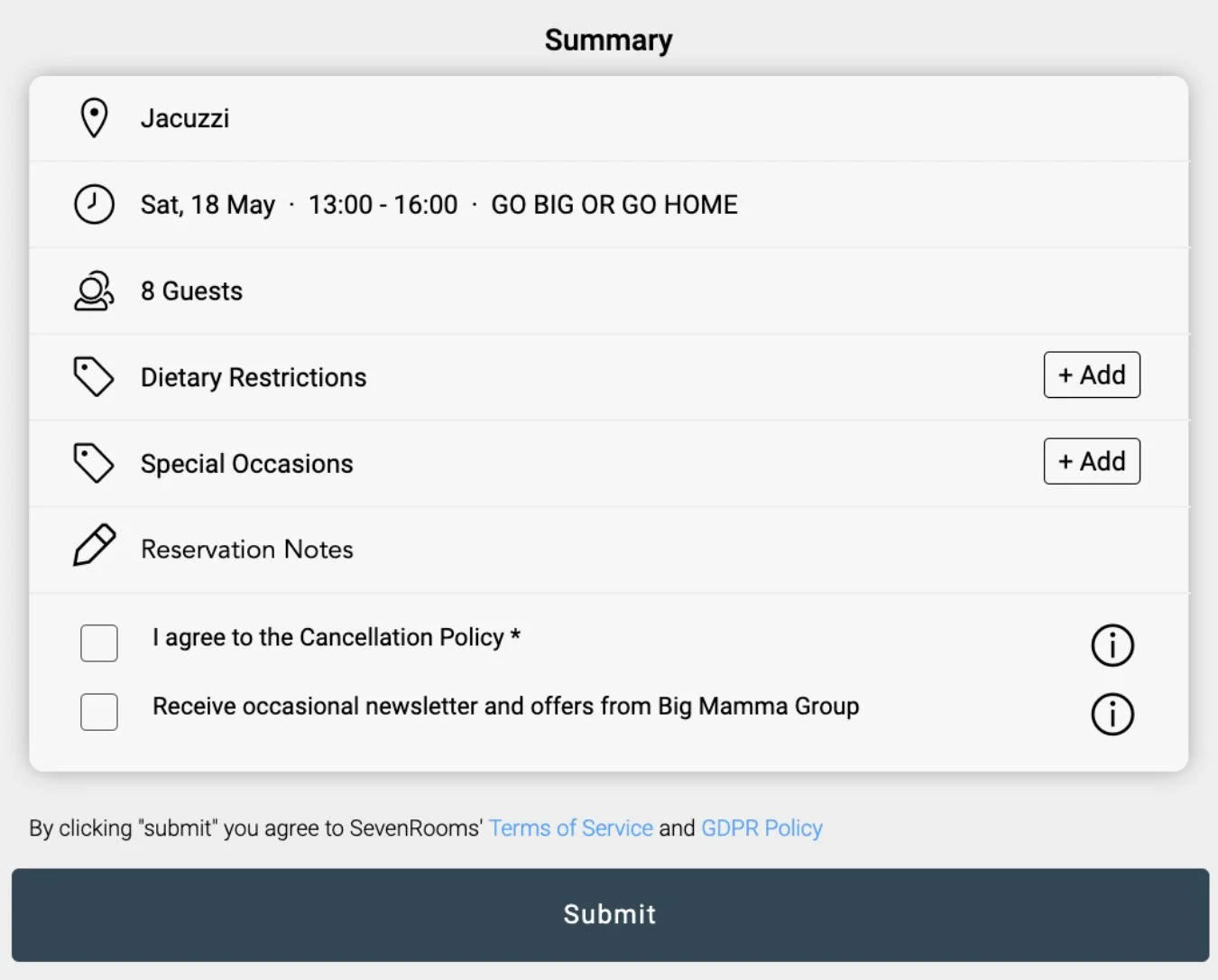
For example, Italian restaurant Jacuzzi uses SevenRooms’ booking widget to inform guests of its cancellation policy when they make reservations.

While its policy is clearly displayed, the restaurant doesn’t take any chances. Before guests can secure the reservation, they must click a checkbox that confirms they agree to the cancellation policy.
5. Automate reservation reminders
Don’t let guests forget about their reservation or your cancellation policy. Use email marketing automation and text reminders to keep these details fresh in guests’ minds.
SevenRooms’ Marketing Automation software lets you automate reminders, making this an effective way to reduce late cancellations without adding more to your team’s day.
Consider sending the following emails:
- Confirmation email: Confirm the reservation and inform guests of important details like the dress code and cancellation cutoff date and time.
- Reservation reminder email: If booked far enough in advance, send an email to confirm reservation details, like time and date a few days before their reservation. Include a link to cancel or reschedule and highlight the cutoff time and date to avoid the cancellation fee.
- Reservation day email: Send a short email reminder about their reservation on the day of. If you’re already past the cancellation cutoff, mention this and remind them of the fee. Keep language positive and enthusiastic. Text reminders also work well.
6. Test and monitor results
Cancellation policies can drive immediate results but tracking is vital to ensure you encourage fewer cancellations and no-shows, not fewer reservations.
- Start with your busiest shifts: Limit your cancellation fee to the shifts with the highest no-show/late cancellation rates. Monitor booking numbers closely from the day you start.
- Gather feedback: Use social listening tools to assess online sentiment. Talk to servers to see if guests mention your cancellation policy negatively. This will help you assess whether the fee is appropriate.
- Adjust if necessary: If you see a significant drop in reservations or star ratings, your cancellation fee may be too high. Consider lowering the fee or increasing the cancellation window and continue monitoring the impact.
Restaurant cancellation policy template
Use this template as a starting point and adjust the deadline, amount and contact details to fit your restaurant. It follows the tips above: it explains why the policy exists, gives guests a clear deadline and an easy way to change their plans, and leaves room for genuine emergencies.
Cancellation policy: We hold each table for you and prepare for your visit, so we ask for at least [48] hours’ notice to cancel or change your reservation. Cancellations made less than [48] hours before your reservation, and no-shows, will be charged [$X] per person to the card provided at booking. You can change or cancel anytime before then using the link in your confirmation email or text. If something unexpected comes up, call us at [phone number] and we’ll do our best to help.
Show the same wording on your booking page, in confirmation and reminder messages and anywhere else guests see your policy, so nobody is surprised by a fee.
Minimize cancellations, maximize revenue
Cancellations are inevitable in the restaurant industry, but a fair policy can minimize them. Use restaurant reservation software to determine the right cancellation fee for your restaurant, automate email reminders and collect payment details.
Most importantly, track your policy’s performance to keep your restaurant bustling and your guests coming back for more.
Learn how SevenRooms’ integrated CRM, reservation software and marketing automation can help you create, enforce and analyze cancellation fees while maintaining a positive guest experience. Book a free demo today.
Restaurant cancellation fee FAQs
Do restaurants actually charge cancellation fees?
Some do, but fewer than the headlines suggest. Only 22% of U.S. venues on SevenRooms charge a cancellation fee, according to our 2025 U.S. Restaurant Industry Trends Report.
How much is a typical restaurant cancellation fee?
The average cancellation fee at U.S. venues on SevenRooms is $52. A common way to set your own is as a share of the expected spend, such as 20% to 30% of a typical check, charged per person or as a flat fee for the booking.
Can restaurants charge for cancelled reservations?
Restaurants typically charge a cancellation fee only when the guest agreed to the policy and left card details at booking. That’s why the policy should appear before the guest confirms, ideally with a checkbox like the one Jacuzzi uses. Rules on fees and card disputes can vary, so check with your payment processor and local regulations before you start charging.
What’s the difference between a cancellation fee and a deposit?
A deposit is paid when the guest books and usually comes off the final bill. A cancellation fee is charged after the fact, to card details captured at booking, and only if the guest cancels after the deadline or doesn’t show up. Our guide to restaurant reservation deposits explains when each one makes sense.
How do guests cancel a reservation made through SevenRooms?
Guests can usually change or cancel using the link in the confirmation email or text the restaurant sent when they booked. Each restaurant sets its own cancellation policy, including any fee, so the deadline and amount appear in that confirmation.
