

Most restaurant email marketing fails before the campaign even sends. Not because the creative is weak, because the data behind it is.
Most restaurant email platforms were built for e-commerce or small business, not hospitality. They handle newsletters and promotions well. What they can’t do is fire a follow-up from a completed reservation, or trigger a win-back the moment a loyal guest goes quiet.
This guide compares six restaurant marketing CRM and email tools. If you want a broader look at CRM options beyond email, our guide to the best restaurant CRMs is a good starting point before narrowing your focus here.
Some are standalone platforms that work well for broadcast campaigns. One is a native CRM and email system where campaigns run directly from live guest data. Start by identifying which category a tool falls into before comparing features.
Restaurant CRM and email marketing tools covered in this guide
This guide reviews six restaurant CRM and email marketing tools and how they compare across guest data integration, segmentation, automation, campaign building and revenue attribution:
- SevenRooms
- Klaviyo
- Mailchimp
- ActiveCampaign
- Constant Contact
- Brevo
The 6 best restaurant email marketing tools in 2026
Not all of these platforms include CRM functionality. Most handle broadcast and promotional campaigns well as standalone email tools. Operators who want campaigns triggered by real dining behavior, rather than a static contact list, will need a platform with native reservation and POS integration.
Map out your strategy first with a free restaurant marketing plan template so you know exactly what capabilities you need before comparing tools.
1. SevenRooms
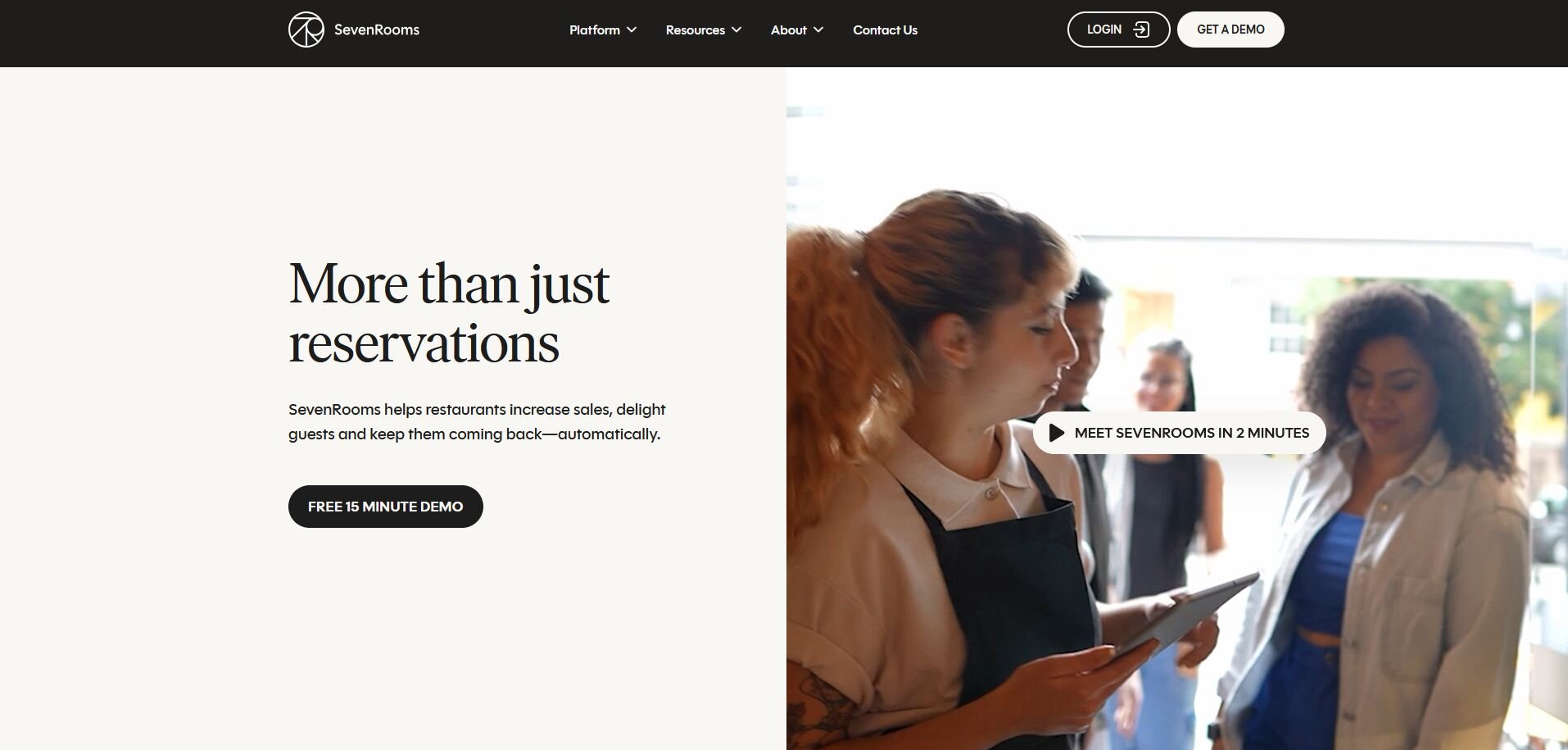
CRM-native platform. SevenRooms is an all-in-one reservations, CRM and email marketing platform built for hospitality. It is the only tool in this list where email campaigns and guest profiles run on the same data layer as your reservation system and POS.
Strengths:
- Marketing Automation: behavioral trigger emails from guest events, post-visit follow-ups, birthday and anniversary offers, lapsed guest win-backs, VIP invitations, all firing automatically from reservation and POS data
- Email Marketing: a full campaign tool for newsletters, one-off sends, A/B testing and segmented campaigns, separate from the automation layer
- Deep segmentation from live visit frequency, spend history, dining preferences and custom auto-tags built over time
- SMS marketing on the same guest profile layer, so email and SMS campaigns coordinate as part of one guest journey
- ROI dashboards that connect sends directly to reservations and revenue, not just opens and clicks
- Pre-built hospitality email templates designed for confirmations, event promos and seasonal sends
What operators see in practice: Balance Hospitality Group previously used Constant Contact and Mailchimp alongside OpenTable. After consolidating onto SevenRooms, the group generated more than $1.3M and 18,000 covers from email marketing across three venues in 18 months. As Filipa Castanheira, Manager and Event Coordinator, put it: "All of our guest data was in SevenRooms, so moving our email campaigns there just made sense."
Limitations: Email templates can be saved and reused, but brand and style guides cannot be automatically applied across all templates. Operators with strict brand consistency requirements will need to maintain template formatting manually.
Best for: Independent restaurants, multi-location groups and hotel F&B operators who want email, SMS, CRM, reservations and review management in one platform.
Did you know? Email works harder when it's part of a broader channel mix. Multichannel campaign tips for restaurants cover how email, SMS and social work together.
2. Klaviyo
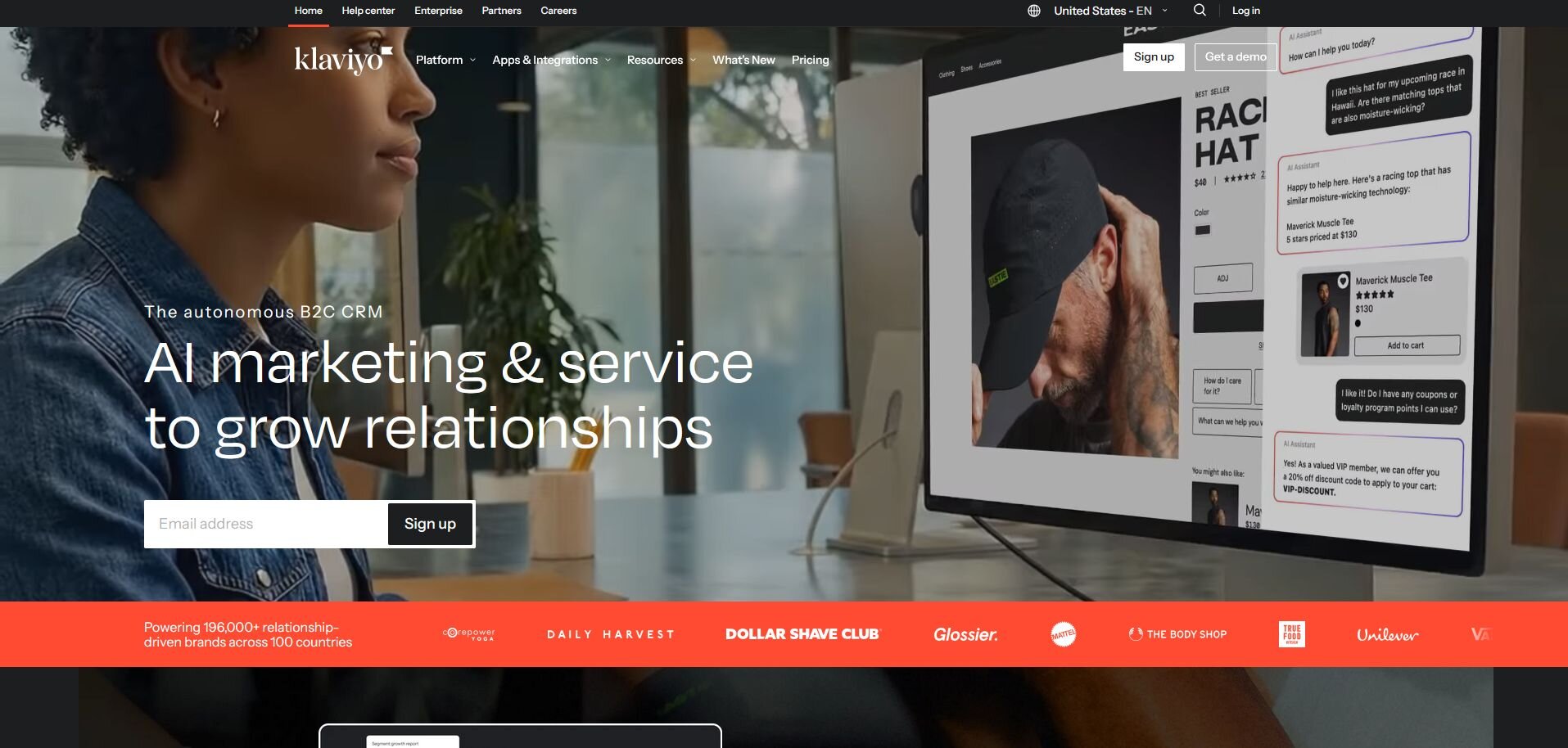
Standalone email and CRM. Klaviyo is a B2C email and CRM platform built for lifecycle marketing across multiple verticals. A growing number of restaurant and hospitality brands use it for segmentation and automation via POS integrations with Toast and Square.
Strengths: Deep segmentation, advanced multi-step workflows, A/B testing and predictive analytics. POS integration allows purchase-based triggers for operators who configure them.
Limitations: Reservation-based triggers require a third-party integration with your booking platform, adding complexity and potential data lag. Operators who need campaigns tied to reservation completions will need to build and maintain those connections themselves.
Best for: Multi-concept operators with dedicated marketing resources who can manage custom integrations with their existing reservation stack.
3. Mailchimp
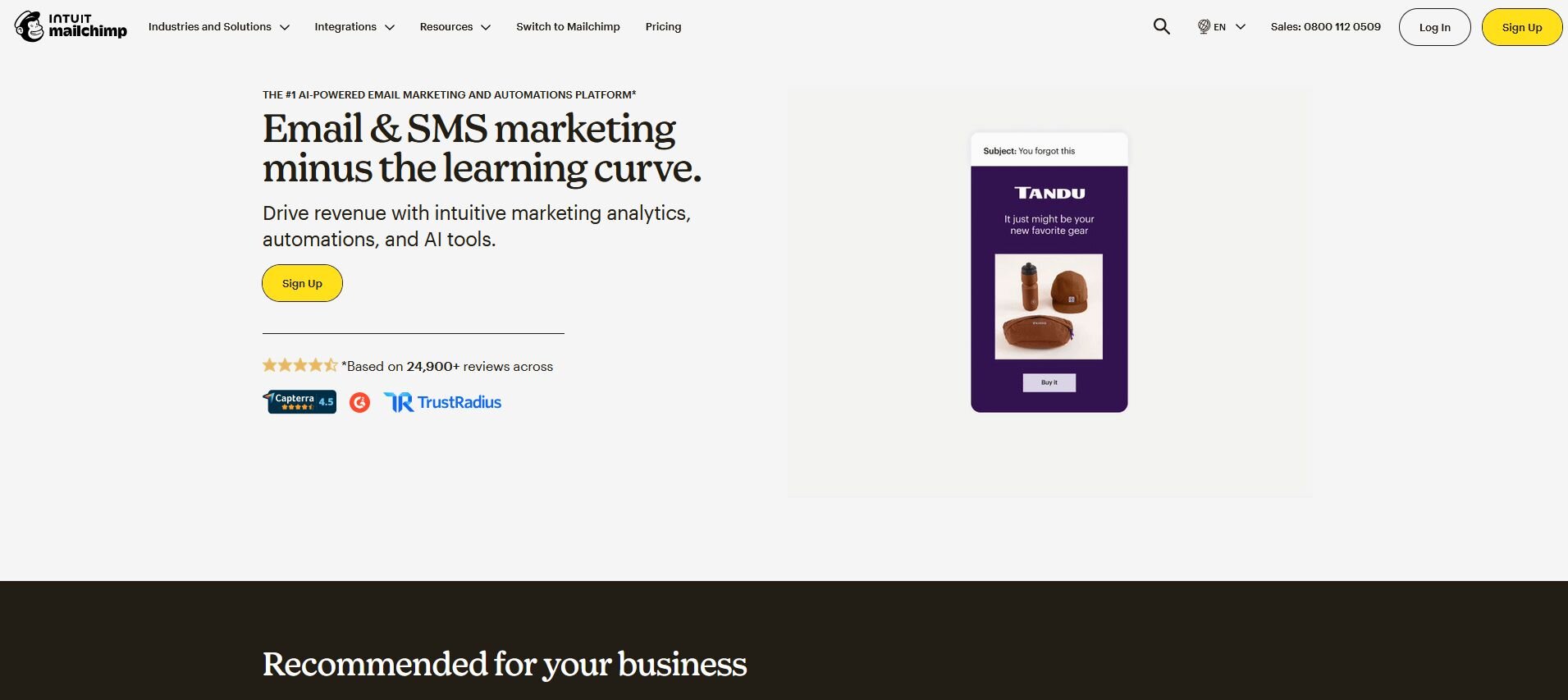
Standalone email. Mailchimp is a widely used email marketing platform with a free tier, an intuitive drag-and-drop editor and pre-built templates including some restaurant layouts.
Strengths: Built-in automations for welcome sequences, birthday sends and basic re-engagement campaigns. Ease of use is a genuine advantage at this price point.
Limitations: No native reservation or POS integration, so personalized emails based on dining behavior require manual data work. Segmentation is more limited compared to hospitality-native tools.
Best for: Early-stage, single-location restaurants building their first email list on a limited budget.
4. ActiveCampaign
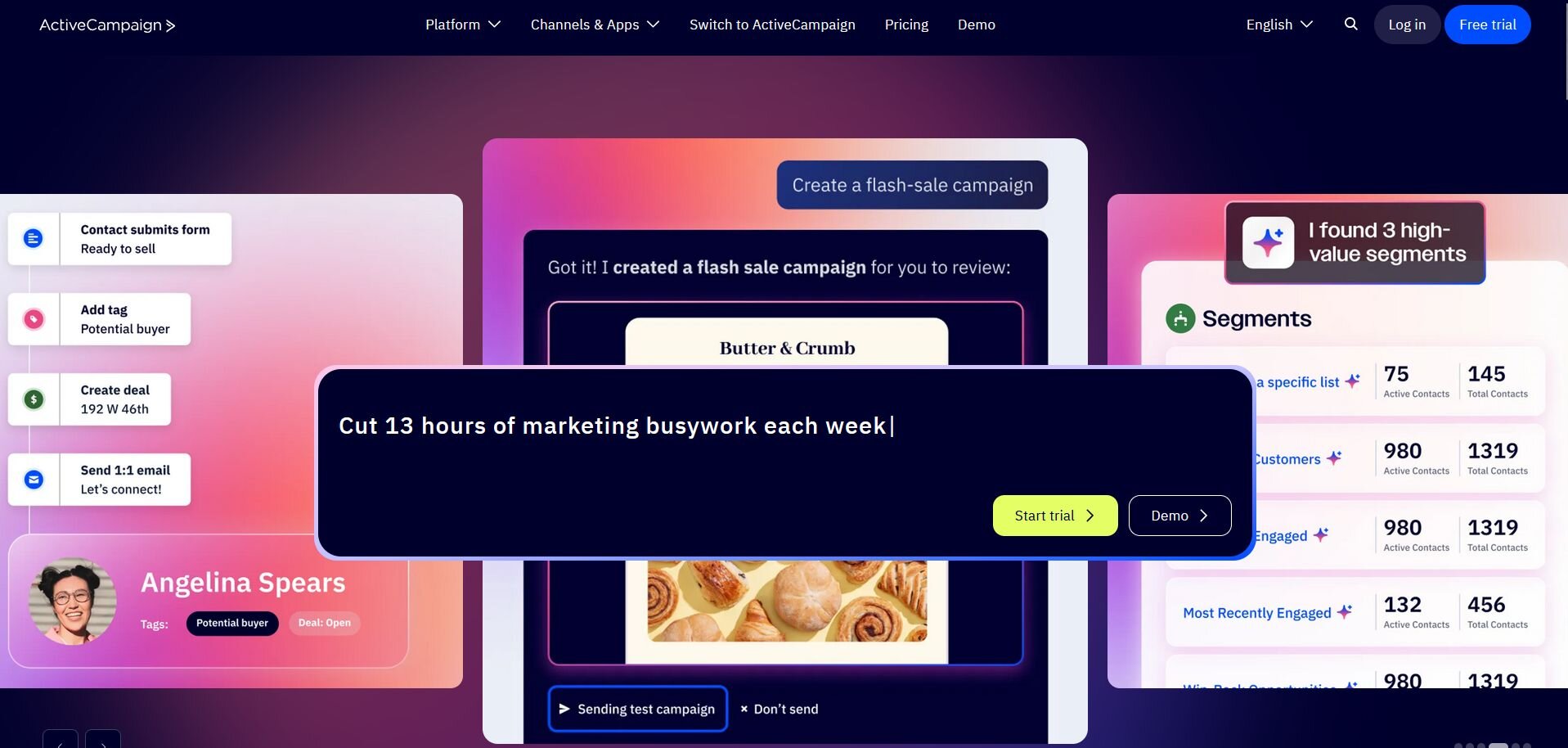
Standalone email with CRM. ActiveCampaign is a marketing automation platform with a visual workflow builder suited to complex, multi-step customer journeys. It includes a built-in CRM and connects with third-party tools via API.
Strengths: Flexible automation builder with multi-condition branching, detailed contact histories and built-in reporting.
Limitations: Built around B2B sales pipelines, not hospitality operations. No native reservation triggers, POS integrations or review management. High-maintenance to adapt for restaurant use without dedicated marketing operations or agency support.
Best for: Multi-concept groups with in-house marketing teams who can build and maintain custom hospitality workflows.
5. Constant Contact
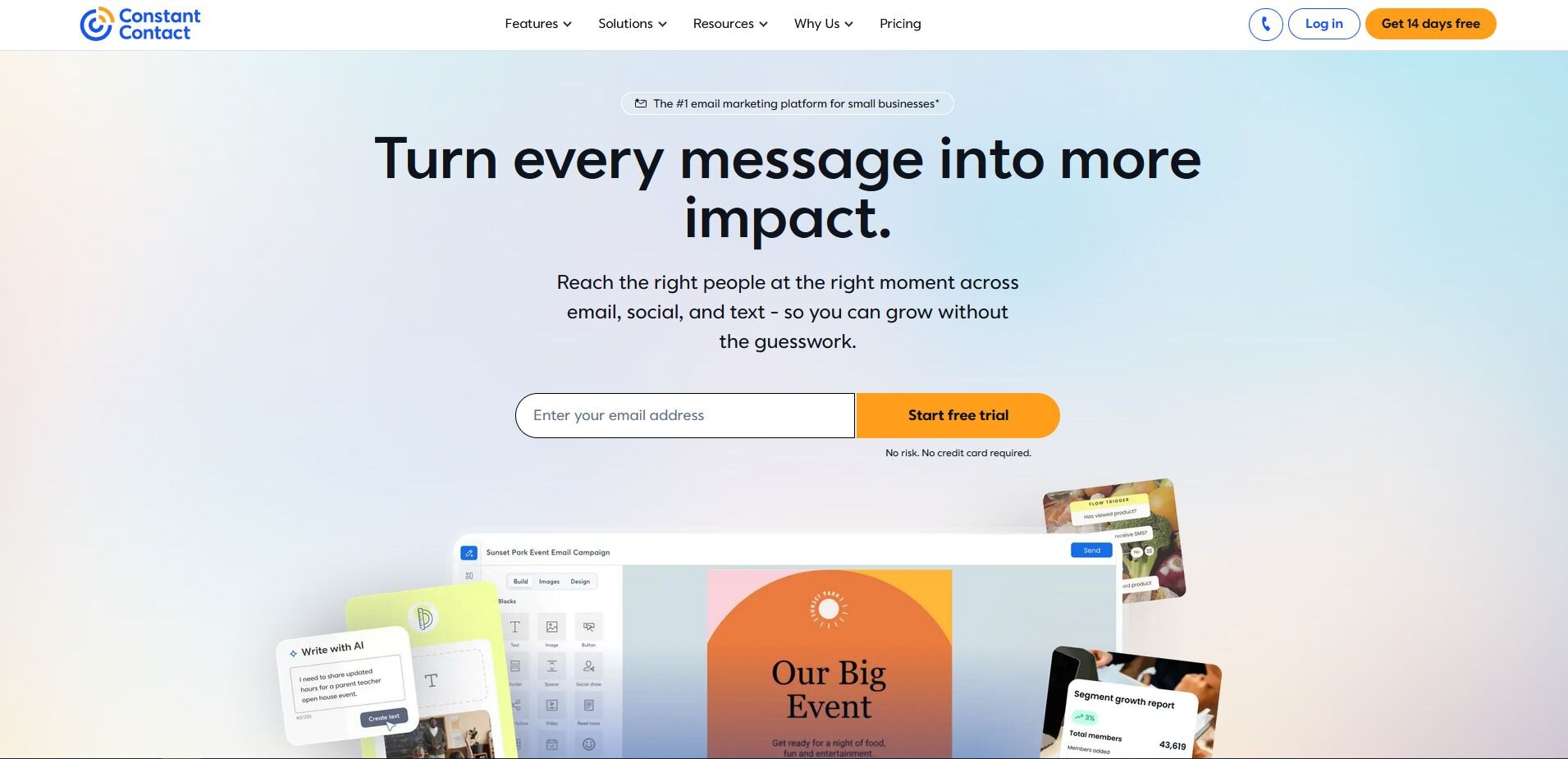
Standalone email. Constant Contact is a straightforward email marketing platform for small businesses, with a drag-and-drop builder and basic list segmentation.
Strengths: Event management tools are a genuine differentiator for restaurant use: registration pages, automated reminders and attendee follow-ups work well for operators running ticketed events and private dining.
Limitations: No native reservation or POS integration, so list management stays manual. Better suited to broadcast campaigns than behavior-triggered sequences.
Best for: Single-location restaurants that regularly host events and want simple, affordable tools for promotion and follow-up.
6. Brevo (formerly Sendinblue)
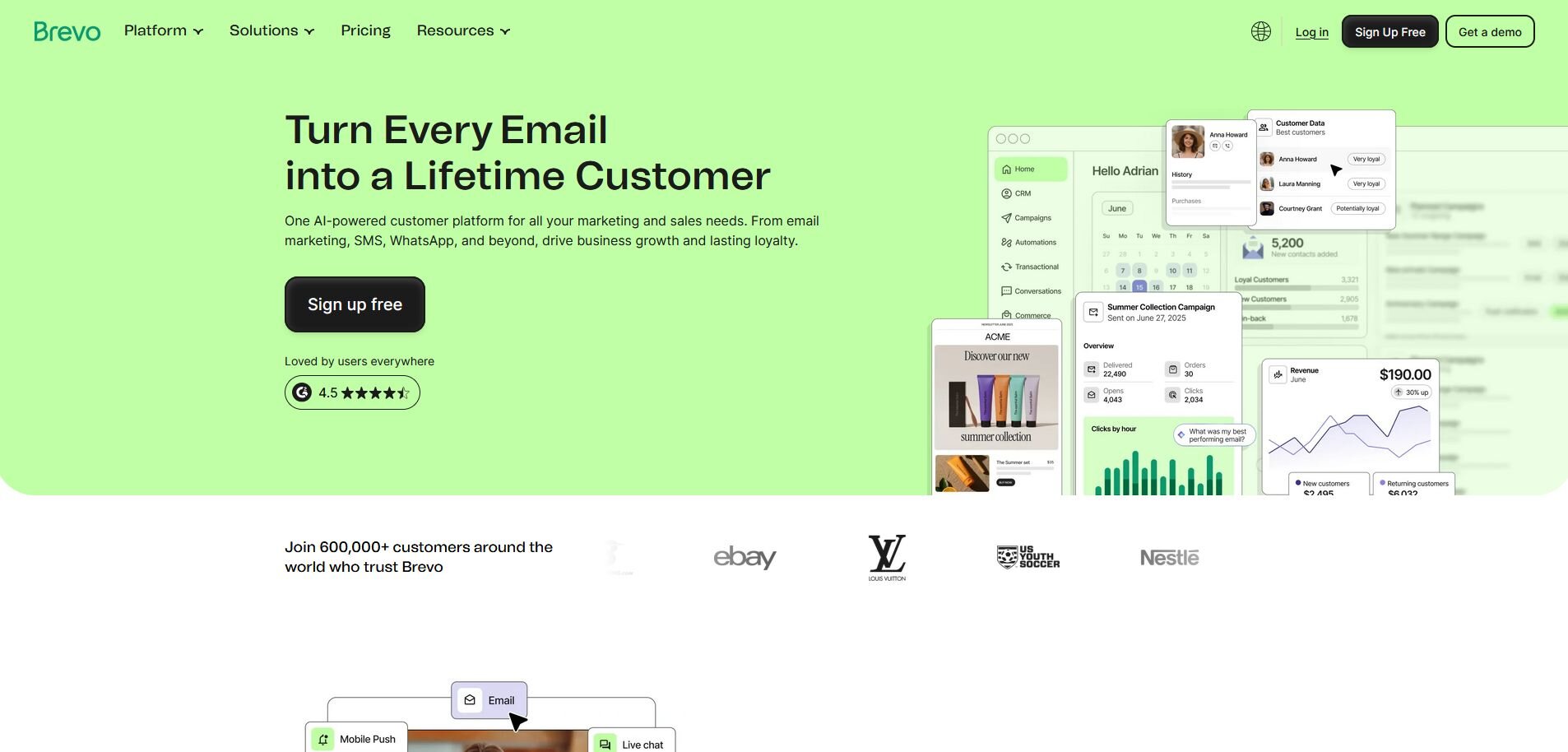
Standalone email. Brevo offers a free plan supporting up to roughly 300 emails per day, with multichannel functionality across email and SMS in a single interface.
Strengths: Automation builder supports welcome sequences, birthday sends and re-engagement campaigns. Transactional email handles confirmation-style sends, and the entry-level pricing works for leaner operations.
Limitations: No native reservation or POS integration. Segmentation based on live dining behavior requires custom integration work.
Best for: Small to mid-size restaurants trying their first multichannel email tool and willing to manage data syncing themselves.
What to look for in restaurant email marketing software
Native connection to your reservation system and POS
A platform with native POS and reservation system integration sends current guest data directly into campaigns, with no manual export required. If you have not chosen a platform yet, start with the best restaurant reservation software for guest data and work backwards to your email stack.
Restaurant email segmentation based on guest behavior
Knowing the difference between a first-time diner and someone who has spent $2,000 with you this year is the foundation of relevant email marketing. That signal comes from behavioral data: visit frequency, spend history, last visit date and dining occasion.
Demographics tell you who someone is; behavioral data tells you how they engage with your restaurant. How you use that data across the full guest lifecycle separates one-time visitors from loyal regulars.
Restaurant marketing automation and post-visit follow-up
True automation activates from guest behavior, not a calendar:
- Reservation marked complete → follow-up email within 24 hours
- Last visit crosses 60 days → win-back campaign triggered
- Birthday or anniversary on file → personalized offer sent before the date
Platforms without native triggers require third-party connectors and manual steps, and that timing difference has a measurable cost.
Easy campaign builders and customizable templates
Restaurant teams should be able to launch campaigns quickly without relying on designers or developers. Look for platforms with drag-and-drop email builders, customizable templates and reusable brand components that make campaign creation faster and more consistent.
Revenue attribution beyond opens and clicks
Open rate tells you who saw the email, but not who came back. The strongest platforms connect campaigns to downstream bookings, covers and revenue, so operators can see exactly which sends drove reservations and at what revenue per campaign.
A/B testing and campaign optimization
Strong restaurant email marketing software should make it easy to test and improve performance over time. A/B testing helps operators understand what actually drives engagement and reservations, rather than relying on assumptions.
Restaurant marketing CRM FAQs
What is a restaurant marketing CRM?
A restaurant marketing CRM is software that builds a guest profile for each diner from reservation and POS data, then uses those profiles to segment guests and send email and text marketing campaigns. A standalone email tool can send similar campaigns, but it typically works from a contact list you upload or sync, so segments are only as current as that list.
What is the difference between email marketing and marketing automation for restaurants?
Email marketing is the tool you use to build and send campaigns: newsletters, one-off promotions, A/B tests and segmented sends. Marketing automation is the layer that fires emails automatically based on guest behavior: a completed reservation, a birthday on file or 60 days without a return visit. SevenRooms' CRM and email marketing platform includes both as distinct capabilities. Many standalone tools offer one or the other, rarely both, and almost never tied to live reservation data.
Do restaurants need a CRM to run effective email marketing?
Not necessarily, but a CRM changes what email marketing can do. Without CRM data, campaigns are broadcast sends to a static list. With a CRM tied to your reservation system and POS, you can segment by visit frequency, spend history and dining occasion, and trigger emails from real guest events. The platform you choose determines how much of that is automatic versus manual.
How do restaurants measure email marketing ROI?
The most reliable method to track email marketing ROI is connecting campaign sends to downstream reservations and revenue, not just opens and clicks. When your email tool and reservation system share the same data layer, bookings made after a send are automatically attributed to that campaign. Without that connection, you are measuring inbox behavior, not dining room impact.
How often should restaurants send marketing emails?
Most operators find one to two campaigns per month works for general segments, supplemented by automated triggers (post-visit follow-ups, win-backs and birthday offers) that activate based on individual guest events rather than a fixed calendar. Irrelevant emails, regardless of frequency, drive unsubscribes faster than any cadence decision.
