
The complaint you hear about is not the first one. By the time a guest tells you the lamb came out cold, two other tables have decided to say nothing and write it down later instead.
Handling it well is rarely a training problem. Nobody has agreed what handling it means, so the outcome depends on which server reached the table first and how their night was going.
A complaint you catch in the room costs you a comped course. The same complaint posted on Google costs you everyone who reads it before they book.
Agreeing on the wording before service is what keeps the first from turning into the second. The follow-up gets easier with reputation management software behind it.
This guide covers the five moves that handle a complaint in the room, the wording for the seven complaints guests raise most and the follow-up that stops the same one arriving again next week.
Which complaints you have to act on
Not every piece of negative feedback is a complaint. A guest who dislikes the playlist is telling you about themselves. A guest who waited 25 minutes between courses is telling you about your kitchen.
Sort by whether it will happen to somebody else. Anything that will is an operations problem wearing a complaint's clothes, and it goes in the log whether or not the guest asked for anything.
Two arrive without anyone raising a hand. One is the table that says "fine, thanks" and never comes back. The other is the phone.
64% of diners still call to book and 40% of those calls go unanswered, per the 2026 DoorDash and SevenRooms Restaurant Industry Trends Report. A complaint left on hold is still a complaint.
1. Listen before you explain
The instinct is to explain. The kitchen was slammed, the server was new, the supplier missed the delivery. Every one of those can be true and none of them helps.
Let the guest finish and do not fill the pause afterwards. The pause is usually where they tell you the part they were not going to mention.
Then repeat the specific thing they said, in their words, before you say anything else. A guest who hears their own complaint repeated back accurately has already had half of what they came for.
2. Name the specific thing that went wrong
"Sorry about that" tells a guest you were not listening. Name it: the wait, the temperature, the bill, whichever one they raised.
Own it in one sentence and stop there. The explaining tends to start in the sentence straight after the apology, so leave that sentence out.
There is one exception. If the same complaint has come up before and you have already changed something, say what you changed. That reads as evidence rather than an excuse.
3. Fix it at the table and say what you are doing
Say what you are about to do, then go and do it. "I am going to have the kitchen fire a new one and I will take it off the bill either way" is a fix. "Let me see what I can do" is a delay in a friendly voice.
Hand the authority out before service rather than during it. A server who has to hunt for a manager to comp a $14 starter will let the complaint sit for ten minutes instead, and ten minutes is long enough for a guest to stop expecting anything.
Comp the item rather than the meal. An oversized gesture reads as guilt and invites the table to wonder what else went wrong.
4. Follow up after the visit, before the review lands
The window between the meal and the review is short and it belongs to you. An automated post-visit email or SMS, sent within 24 hours, gives the guest somewhere private to put the complaint they were too polite to raise at the table.
It is the same channel you use to ask everyone else how the night went. Our list of restaurant survey questions has the wording for both the email and the SMS.
If the answer comes back unhappy, reply as a person rather than a template, and reply the same day. If it comes back happy, that is the guest to ask for a public review.
5. Log it so the same complaint stops repeating
A complaint fixed at the table and nowhere else will arrive again next week from somebody else. Tag the theme rather than the incident: pacing, temperature, noise, whichever it was.
Three tables naming a 20-minute gap on the same night of the week is a staffing decision. Handled as three separate apologies, it stays invisible until it turns up in your rating.
The log has to sit where the next shift will see it, which means the guest profile in your restaurant CRM rather than a notebook behind the host stand.
83% of operators say connecting their systems would improve profitability, and 1 in 5 cannot identify the same guest across on-premise and off-premise visits.
What to say to the seven complaints guests raise most
The five moves above are the shape. What follows is the wording, one complaint at a time. Every line is meant to be said out loud at a table, so read them that way before you hand them to anyone.
Food and drink complaints
Cold food, the wrong temperature, a dish that does not match its menu description, an order that came back wrong because nobody repeated it at the table.
Say: "That is not what we send out and I am sorry. I am having the kitchen fire a new one now, and it comes off the bill either way."
Do not say: anything that opens with "unfortunately", anything about how busy the kitchen is or an offer of money before an apology.
What to fix:
- Track ticket times at the pass. A kitchen display system shows which dishes sit longest before they leave. Temperature complaints start there.
- Read the order back at the table. Wrong-dish complaints usually begin where the order was taken rather than in the kitchen. Ten seconds prevents it.
Allergen complaints are a separate category and they never take the wording above. More than half of Americans are affected by a food allergy, intolerance or sensitivity, according to IFIC's 2025 spotlight survey.
A guest raising one gets a manager rather than a server, and the dish gets made again from scratch rather than corrected.
Customer service complaints
Inattentiveness, a server who disappeared, courses landing at different times, a table cleared while somebody was still eating.
Say: "You should not have had to wait for that and I am sorry. I am looking after your table myself for the rest of the evening."
Do not say: "I'll find your server." The guest has already tried that.
What to fix:
- Build pre-shift from your own feedback. Train on the two themes your surveys keep raising rather than running a generic service refresher.
- Give every section a check-back rule. Two minutes after the entrée lands, somebody asks. That is while it is still a fix.
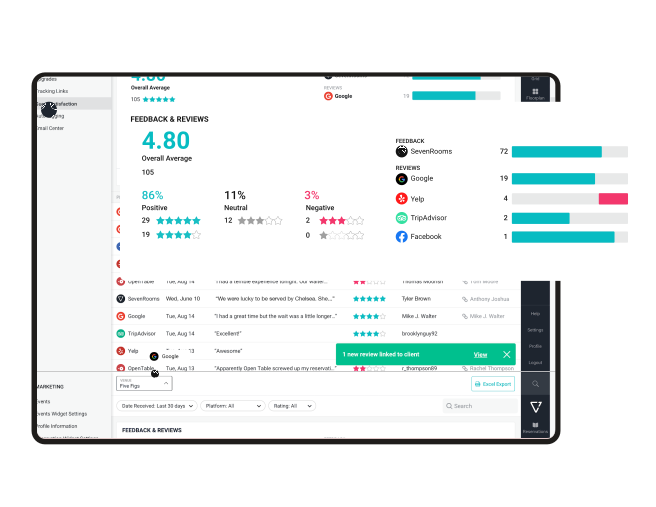
For example, when Gosford RSL began using SevenRooms’ AI and automation, they were able to collect feedback and address it before it ended up on Google.
Atmosphere complaints
Noise, temperature, lighting, a table next to the service door.
Say: "Let me move you." Then move them, if there is anywhere to move them to.
Do not promise a change you cannot make tonight. If the room is loud because it is full, say so plainly and offer the quietest table you have next time, noted on their booking.
What to fix:
- Ask about the room specifically. Temperature and noise rarely come up unless you ask. They turn up in the review instead.
- Note the table number too. If the same two tables draw the noise complaints, a seating rule fixes it faster than an apology.
Darwin Brasserie used SevenRooms’ reservation system to monetize its window seats with a view. By labeling them a premium option guests could select at booking, the venue achieved a 626% increase in digital sales within two months.
Online ordering complaints
The wrong item, food that arrived cold, a long wait, a driver who could not find the door.
Say: "That order should not have reached you like that. I am refunding it and I would like you to try us again on us."
Do not blame the platform in front of the guest, even when the platform is the reason. The name on the bag is yours.
What to fix:
- Connect ordering to your POS. One order flow means fewer transcription errors and no kitchen reading two screens at peak.
- Check the packaging before you blame the driver. Food arriving cold is often a container problem. Order from yourself and find out.
Hygiene complaints
Hair in a dish, a dirty utensil, a restroom nobody has checked since 8pm.
Say: "Thank you for telling me. I am dealing with it now." Then deal with it where the table can see you doing it.
Do not investigate at the table. Whether it was a hair or a thread does not change what the guest saw.
What to fix:
- Put the restrooms on a timed check. Every 90 minutes on a busy service, initialled, where a manager can see it.
- Start the checklist with what guests see. Restrooms, table settings and glassware come before the stockroom. Only those generate reviews.
Pricing complaints
A surprise charge, an upsell nobody flagged as extra, a service fee that went unexplained.
Say: "The guacamole is charged separately and we should have said so when you ordered. That is on us, I am taking it off."
Do not argue about value. A guest who says it was expensive is describing what they felt, and that is not a fact you can correct.
What to fix:
- Flag every upcharge when the guest orders. Guests forgive a price. They do not forgive finding it on the bill.
- Put the cancellation policy on the booking screen. A no-show fee argued at the table was avoidable when they booked.
Technology complaints
A booking that vanished, a confirmation that never arrived, a kiosk that took the order wrong, a QR menu that would not load.
Say: "I have got your table, do not worry about the booking." Sort the record out afterwards.
Do not make the guest prove they booked. Asking for a confirmation email at the host stand turns your systems failure into their problem.
What to fix:
- Test your own booking flow monthly. Book a table on your phone from a cold start and count the taps.
- Train the recovery as well as the system. Every host should know what to do with a missing booking before it happens at 8pm.
Catch the complaint before it becomes a review
Everything above happens because somebody was standing there. The complaints that cost the most are the ones where nobody was.
An automated feedback request after every visit routes the unhappy version to you privately, the same day, while a phone call can still change how it ends. The request runs on marketing automation, triggered by the completed reservation rather than by anyone remembering.
What comes back still has to be read. AI Feedback Summary groups the responses into themes, so the problem three guests keep naming surfaces without anyone opening every one.
Once a complaint is public it becomes a different job with different rules. Our guide to restaurant reputation management covers the reply order, the wording and the response times guests now expect.
Turn one complaint into a returning guest
A complaint is the only feedback that arrives with a name attached and the person still in the building. Handled in the room it costs you a course. Handled a week later in public it costs you the bookings of everyone who reads it.
SevenRooms sends the post-visit request, attaches the answer to the guest profile and tells your host who is walking in and what went wrong last time. Book a demo and we will show you what that looks like on a Friday night.
Restaurant complaint handling FAQs
How do you handle customer complaints in a restaurant?
Listen without explaining, name the specific thing that went wrong, fix it at the table and say what you are doing, follow up within 24 hours and log the theme so it does not repeat.
The order is what does the work. Skipping to the fix without naming what went wrong is what leaves a guest still annoyed after a free dessert.
What are the most common complaints in restaurants?
Food and drink, service, atmosphere, online ordering, hygiene, pricing and technology. Food and service are the ones guests tend to raise at the table, where you can still do something about them. Atmosphere and pricing tend to go straight into a review instead.
What should you not say to a guest who is complaining?
Anything opening with "unfortunately", any account of how busy you are and any offer of money before an apology. Do not ask the guest to repeat the complaint to somebody else either. Each retelling makes it bigger and makes you the third person who could not help.
Should you offer a free meal for a complaint?
Comp the item rather than the meal, unless the problem ran through the whole visit. An oversized gesture reads as guilt and prompts the guest to wonder what else went wrong. What brings them back is the follow-up, not the size of the discount.
