

An incredible 40% of restaurant calls go unanswered. Not to mention, reviews accumulate faster than staff can read them, and rising labor costs eat into profit margins even when the dining room is full. Issues like these are data and automation gaps, and operators are turning to AI to address them.
79% of restaurant operators now use AI in some form, according to SevenRooms' 2025 Trends Report. The challenge is finding the right tool for each problem, and identifying what separates genuine AI from rules-based automation. Our guide to AI for restaurants covers where AI fits across the business. This one compares the tools.
This guide breaks down the 8 AI tools restaurants are deploying today, grouped by the problem each one solves.
The 8 best restaurant AI tools in 2026
This guide reviews eight restaurant AI tools and how each one helps operators automate workflows, improve guest engagement, reduce operational waste and make smarter decisions across the front and back of house:
- SevenRooms
- Toast AI
- Fourth iQ
- Tattle
- Olo
- ClearCOGS
- Bikky
- DoorDash Commerce Platform
Best restaurant AI tools comparison table
| Tool | Category | Best for | AI features (as described below) |
|---|---|---|---|
| SevenRooms | Guest CRM and Voice AI | Full-service restaurants and multi-location groups that want to own guest data | Voice AI, AI feedback summaries, AI seating algorithm |
| Toast AI | POS with the Toast IQ AI layer | Operators running on Toast POS | Menu engineering insights, demand forecasting, predictive labor, check trend analysis |
| Fourth iQ | Workforce and inventory forecasting | Multi-location operators where labor cost variance hits margin | Demand forecasting, staffing recommendations |
| Tattle | Guest feedback (CXI) | Multi-location operators tracking service consistency | Predictive issue detection, sentiment segmentation, guest recovery, benchmarking |
| Olo | Digital ordering and delivery | Multi-unit operators running digital ordering at scale | Smart upsells, order throttling, delivery prediction, guest segmentation |
| ClearCOGS | Prep and inventory forecasting | Operators managing food cost variance or prep waste | Prep prediction, waste pattern analysis |
| Bikky | Customer data platform | Multi-unit operators connecting reservation, POS and loyalty data | Channel forecasting, churn prediction, cohort analysis, daypart optimization |
| DoorDash Commerce Platform | Direct online ordering, loyalty and marketing | Restaurants that want to own their direct ordering channel | AI-powered websites, AI-powered marketing, AI review replies |
1. SevenRooms: Guest CRM and Voice AI
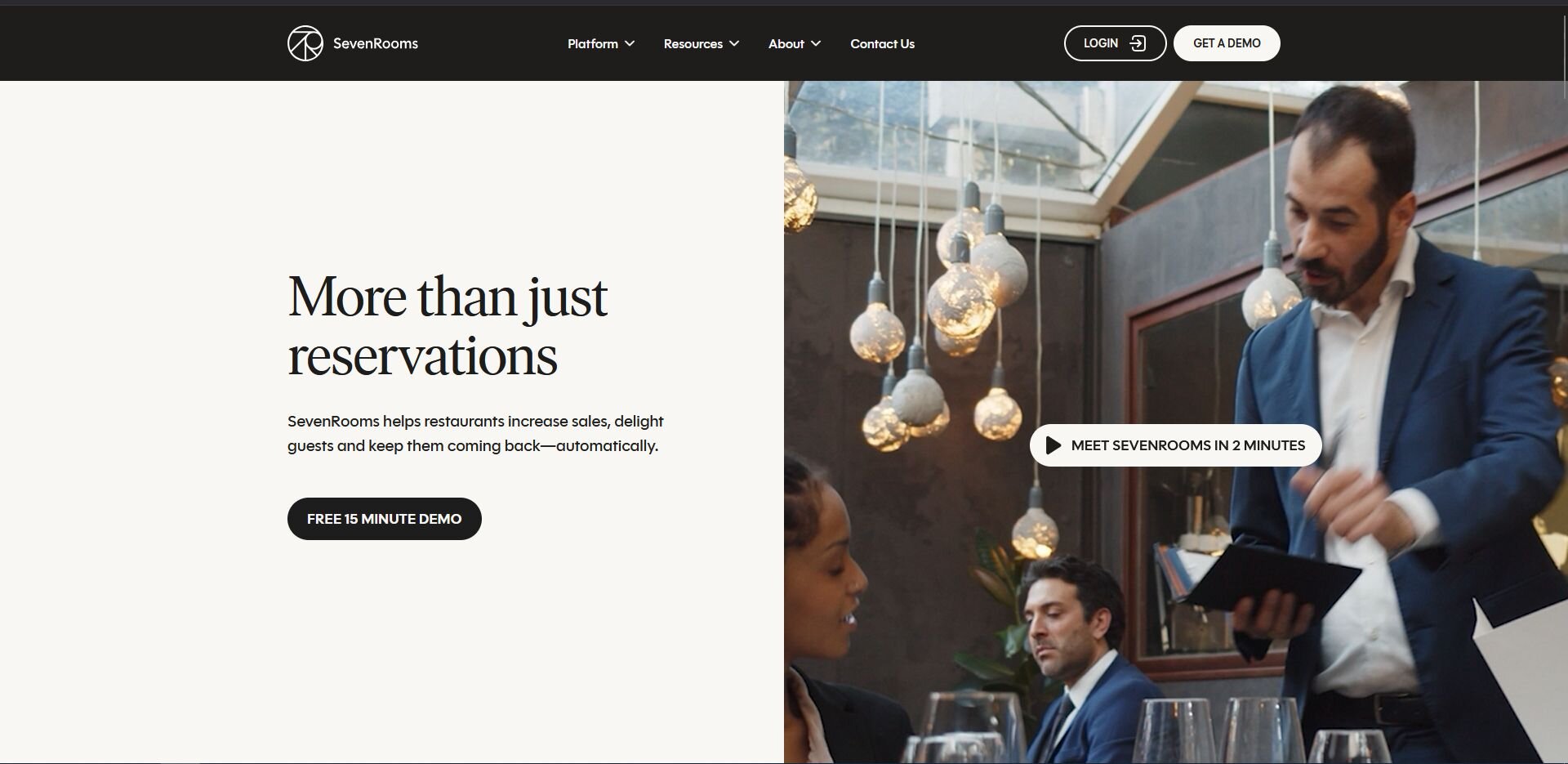
SevenRooms is a CRM, Marketing and Operations platform for hospitality, serving over 15,000 restaurants worldwide from Michelin-star to local favorites.
Best for: Full-service restaurants and multi-location groups that want to own their guest data, capture phone reservations automatically and run personalized marketing from one platform.
SevenRooms ties guest data, reservations and marketing into one system, so the insight a tool generates lands in the same place an operator acts on it. Here's what the AI layer does.
- Voice AI answers inbound calls using natural language processing and writes the reservation straight into the guest CRM. Two in five inbound calls go unanswered, and SevenRooms' 2025 data found that 75% of diners are comfortable using AI for reservations. When no one picks up the phone, the reservation goes to the competitor who does.
- AI feedback summaries surface recurring patterns and dish-level sentiment across reviews, so no manager has to read each one to know that the risotto keeps drawing complaints. Reviews are one of the easiest ways to make or break a business, and a solid reputation management strategy is critical.
- AI seating algorithm optimizes table turns in real time, reading party size, pacing and booking patterns to protect both covers and the guest experience.
SevenRooms also powers DoorDash Reservations for marketplace reach. Direct bookings are first-party, so the restaurant owns the guest data, while DoorDash brings new demand on top.
2. Toast AI
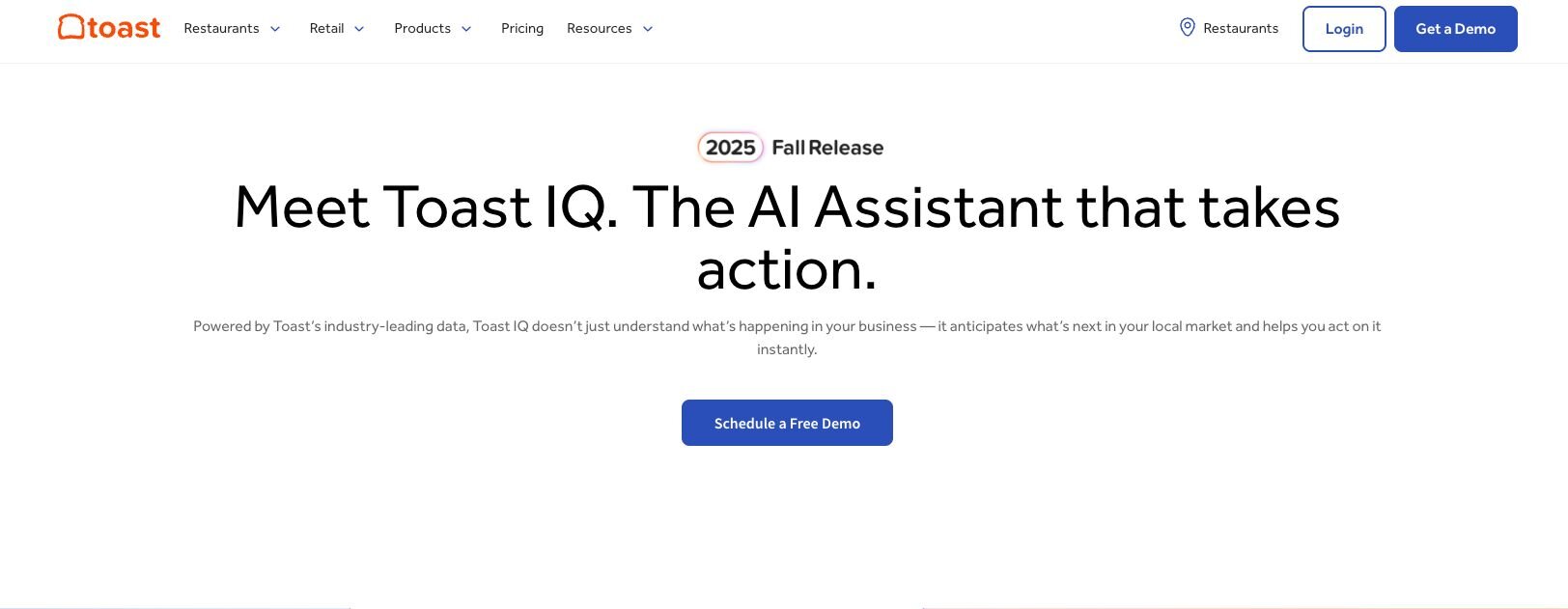
Toast is a restaurant point-of-sale platform, and Toast IQ is the AI layer that reads its transaction data. CAVA, Shake Shack and Urban Plates run on Toast.
Best for: Operators running on Toast POS who want to connect transaction data to staffing and menu decisions.
Toast reads the point of sale at the item level, which gives its AI a clear view of what sells, when and at what margin. For operators already on the platform, that turns raw transaction data into decisions about labor and menu. Here's what it surfaces.
Menu engineering insights flag low-margin, low-velocity items based on sales data, so the dish no one orders quickly becomes obvious.
AI demand forecasting predicts cover volume by daypart from historical patterns, giving managers a read on a Tuesday lunch rush before it arrives.
Predictive labor models recommend staffing levels from booking pace and sales history, a direct lever on labor optimization when payroll is the line item under the most pressure.
Check trend analysis uses pattern recognition across shifts to surface upsell, add-on and modifier opportunities, the kind of margin that hides in plain sight on the average check.
SevenRooms Reservations and CRM platform integrates with Toast POS to build richer guest profiles based on dining and spend data.
3. Fourth iQ
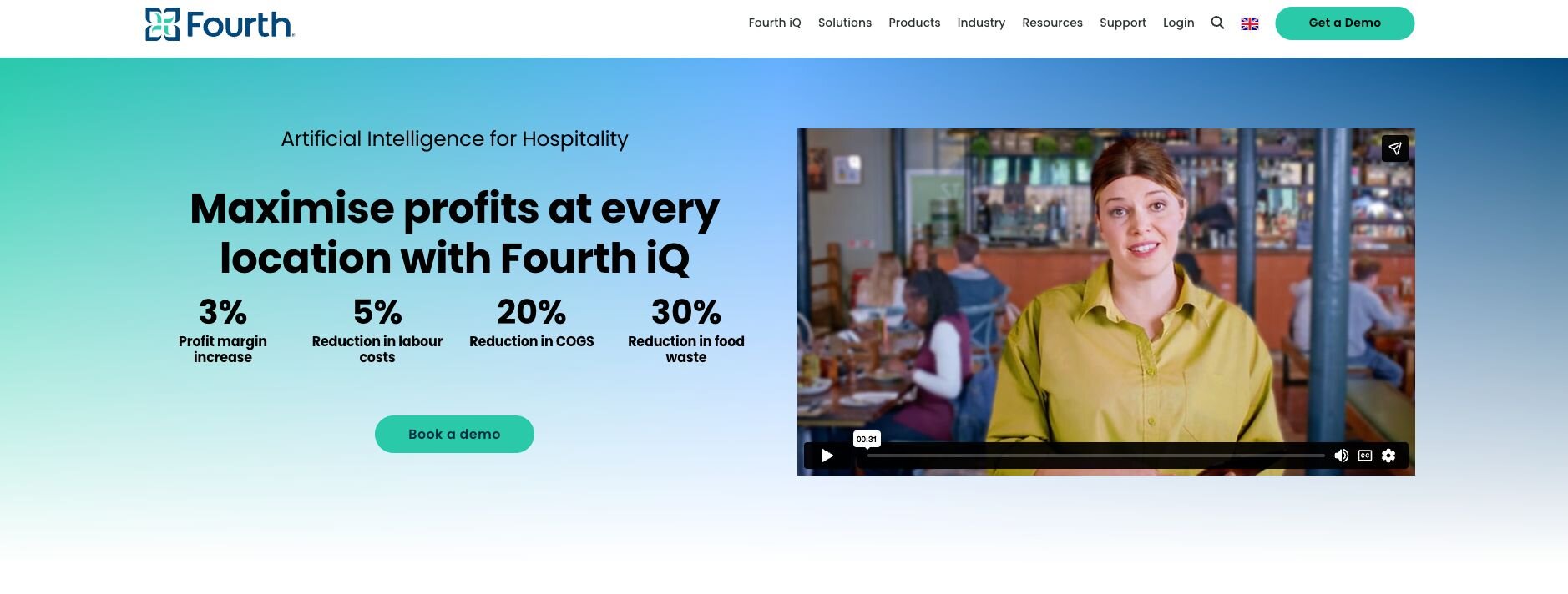
Fourth is a workforce and inventory management company for hospitality. Fourth iQ is its AI forecasting layer, used by chains like Chili's and Noodles & Company.
Best for: Multi-location operators where labor cost variance has a direct hit on margin.
Fourth iQ uses machine learning to predict one of the hardest numbers in the business: how many people you'll need on the floor on a given shift. Here's how it works.
- Demand forecasting analyzes historical cover data, booking pace, local events and weather signals to predict shift volume, so a forecast accounts for the street fair two blocks over and the rain that follows it.
- Staffing recommendations translate that forecast into suggested levels per daypart, giving managers a labor optimization starting point based on facts.
Fourth iQ integrates with enterprise POS systems, while Lineup.ai targets independent and mid-size groups, so the same predictive analytics approach scales to the size of the operation.
4. Tattle
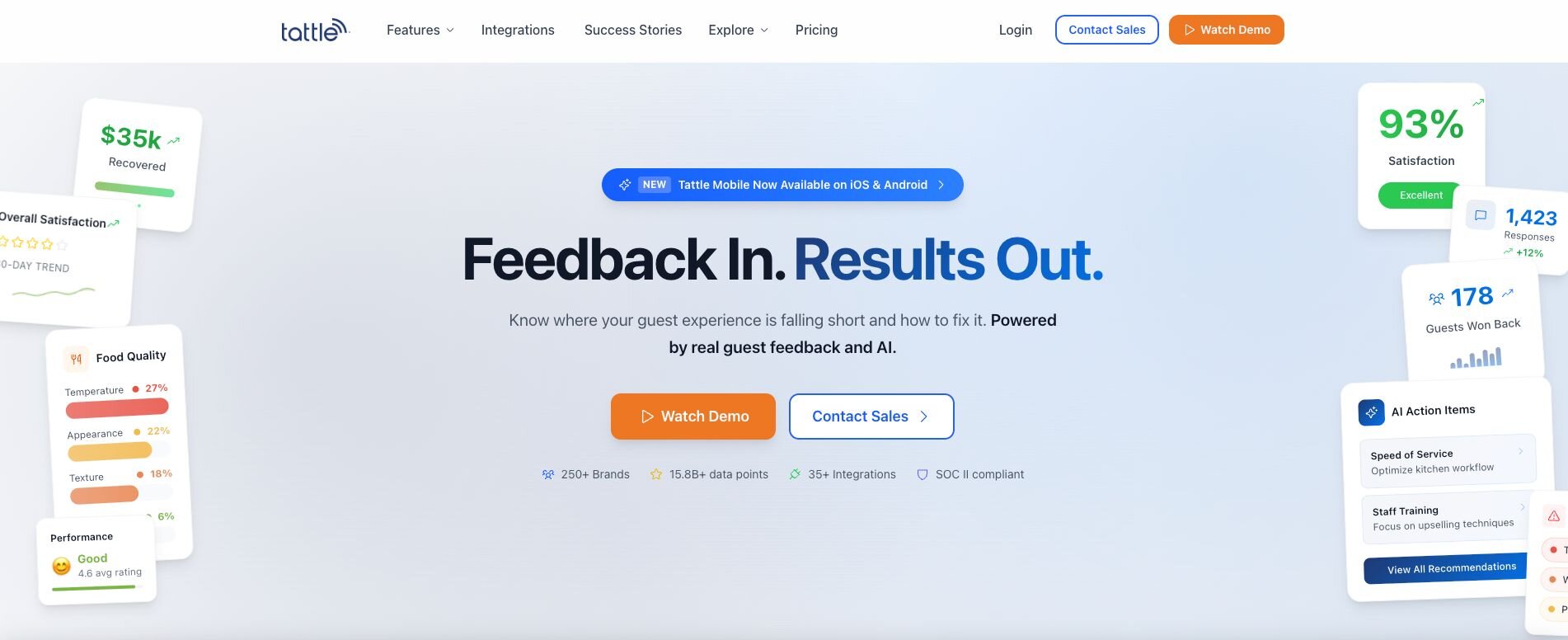
Tattle is a guest feedback platform, a Customer Experience Improvement (CXI) tool, used by brands like MOD Pizza and Hooters.
Best for: Multi-location operators tracking service quality consistency across locations.
Tattle reads guest feedback and catches service problems early, before they show up in a public review. Here's what it does.
- Predictive issue detection flags operational problems per location before they escalate into visible service failures.
- Sentiment segmentation breaks guest feedback into categories: food, service, speed and ambiance. A manager sees whether the complaint is due to lag in the kitchen or at the host stand.
- Automated guest recovery flows trigger on low satisfaction scores, reaching out to a disappointed guest while the visit is still recent enough to fix.
- Cross-location benchmarking tracks performance over time, so a regional lead can see which rooms hold the standard and which slip.
5. Olo
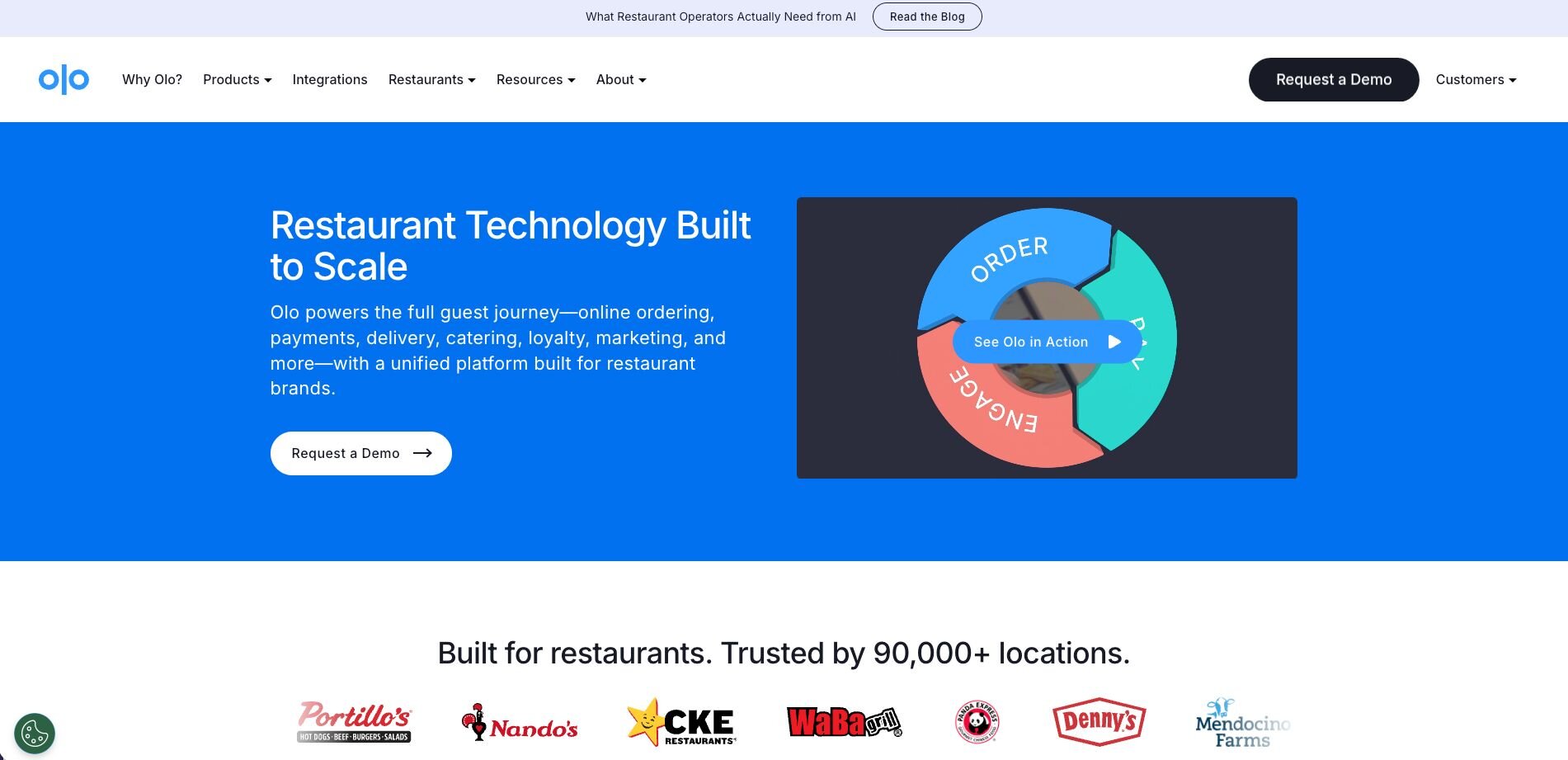
Olo is a digital ordering and delivery platform for large restaurant brands, including Wingstop, Sweetgreen, Five Guys and Shake Shack.
Best for: Multi-unit operators managing digital ordering, delivery and loyalty programs at scale.
Olo runs the digital ordering layer for large restaurant brands. Its AI lifts the value of each order while keeping the kitchen from buckling under volume. At scale, those two pressures define the guest experience on every delivery. Here's how it manages them.
- Smart upsells at checkout read order history and item affinity to suggest the add-on a guest is likely to want, raising the average check without a staff prompt.
- Order throttling uses real-time kitchen capacity signals to pace incoming orders, so a Friday rush doesn't bury the line and blow out ticket times.
- Delivery performance prediction forecasts results by channel, giving operators a read on which delivery partners hold up and which drag the experience down.
- AI guest segmentation sorts diners for digital marketing channels, the targeting that lands a loyalty program with the right guest instead of everyone at once.
6. ClearCOGS
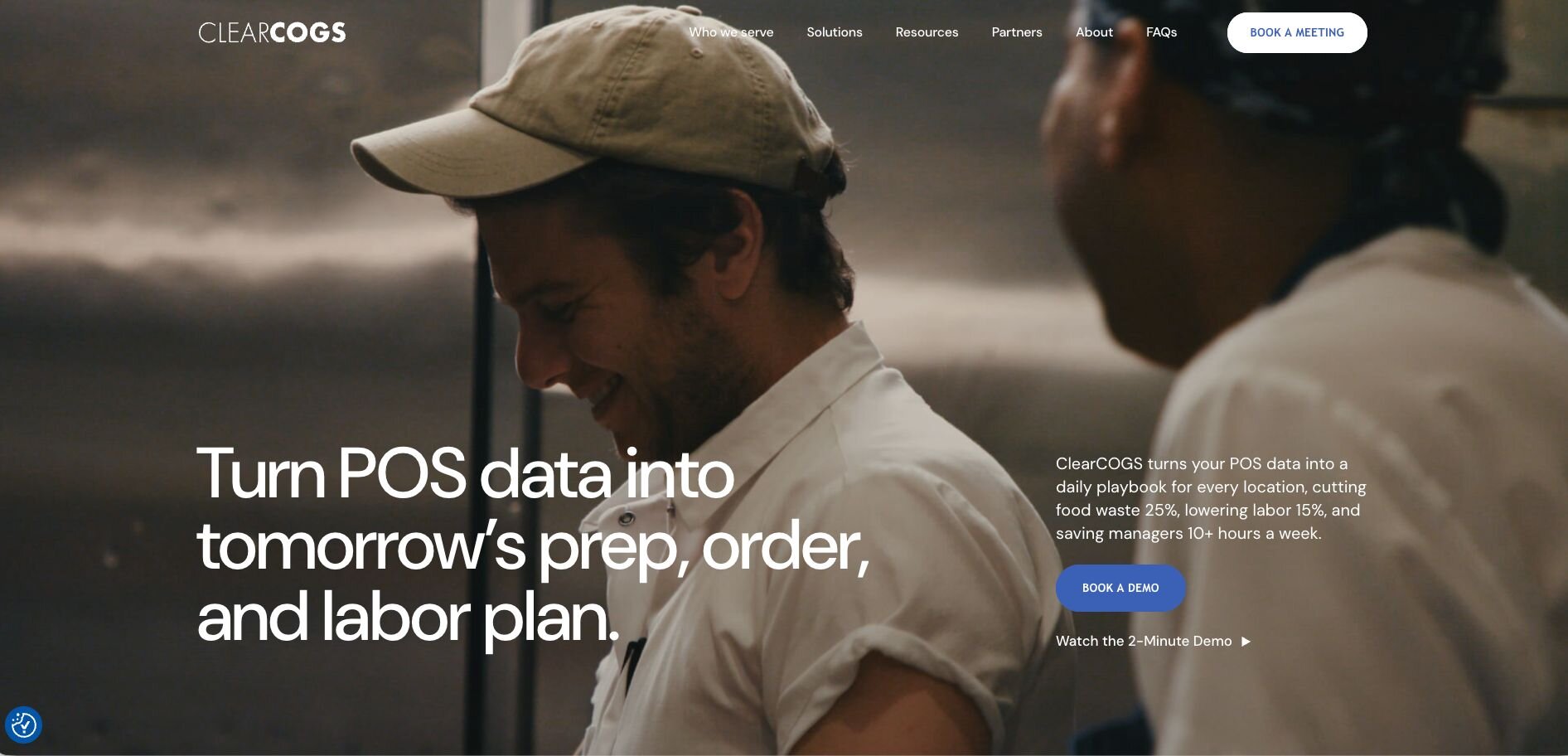
ClearCOGS is an AI forecasting platform that turns POS data into daily prep, order and staffing plans. Customers include Jimmy John's and Goop Kitchen.
Best for: Operators managing food cost variance or prep waste across one or more locations.
ClearCOGS works on the costs that decide a kitchen's margin. It points predictive analytics at prep and inventory, so the kitchen makes the right amount and food cost stops leaking through the back door.
- Prep prediction forecasts how much the kitchen should make and flags inventory depletion before it affects service, the line between an 86'd special at 7pm and a smooth Saturday.
- Waste pattern analysis reads where product ends up unused and recommends daily adjustments, turning yesterday's waste into today's prep sheet.
ClearCOGS connects to the point of sale, integrating with Toast, Square and Lightspeed to pull the sales data its forecasts run on. Operators using it report meaningful food waste reductions within the first few months.
7. Bikky
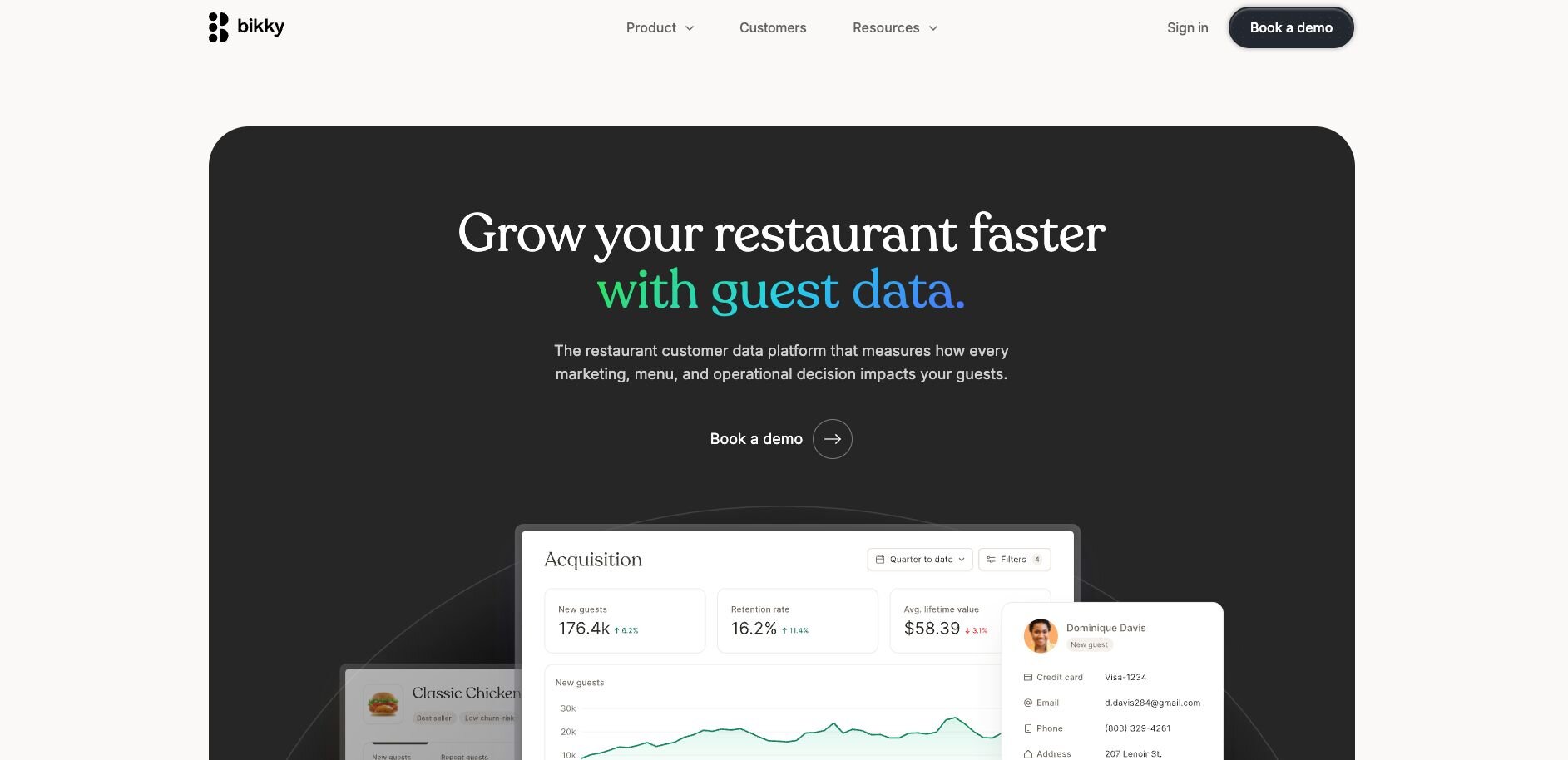
Bikky is a customer data platform (CDP) built for multi-unit restaurants, used by brands like Bojangles.
Best for: Multi-unit operators who want to connect reservation, POS and loyalty data to understand revenue by channel and predict guest churn before it happens.
Bikky is the analytics layer that tells a group where its revenue comes from and which guests are about to stop showing up. It pulls reservation, point of sale and loyalty data into one view, then applies predictive analytics to surface patterns no single system sees on its own.
- Forecasting by channel breaks revenue down by OTA, POS and direct booking, showing where growth springs from.
- Churn prediction identifies guests whose visit frequency is slipping before they lapse, the window when a well-timed offer still brings them back.
- Cohort analysis tracks guest behavior over time to measure retention across acquisition sources, so you judge a loyalty program on who it keeps, not just who it signs up.
- Daypart optimization surfaces underperforming time slots with data on cover and spend patterns.
8. DoorDash Commerce Platform
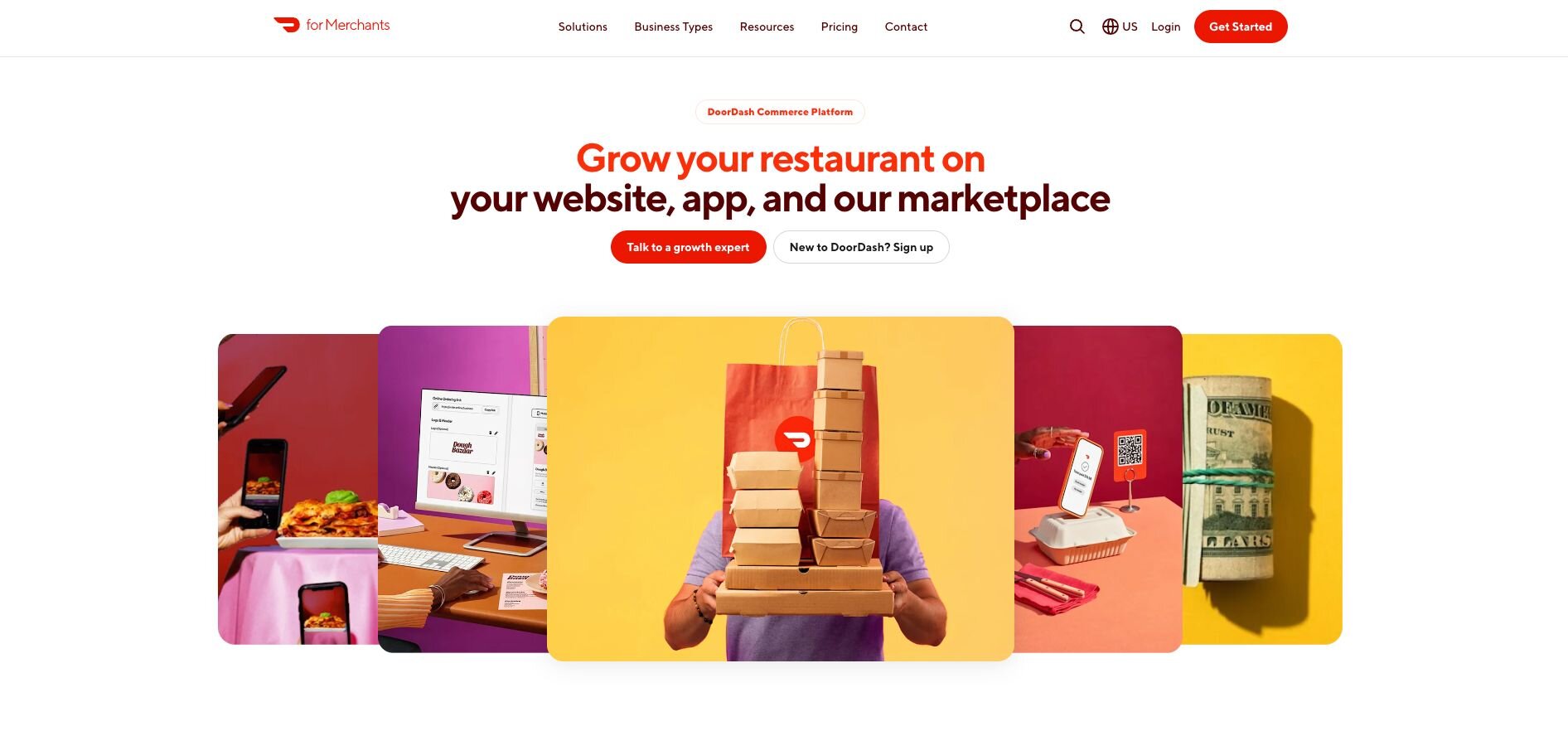
DoorDash Commerce Platform is a suite of commission-free tools for direct online ordering, branded sites and apps, loyalty and marketing. It runs on the same technology behind the DoorDash Marketplace.
Best for: Independent restaurants and groups that want to own their direct ordering channel, with a branded site, app, loyalty and marketing in one place.
Commerce Platform began as an automation toolset, and DoorDash has since layered AI features across it: building ordering sites, generating campaign content, and drafting review replies. You'll get:
- Commission-free online ordering on a branded website and mobile app, so the order and the guest data belong to the restaurant.
- AI-powered websites that generate a branded, SEO-optimized ordering site from the menu, branding and photos a restaurant already has, live in minutes instead of hours.
- AI-powered marketing that writes email content and schedules campaigns around occasions like Mother's Day and local events, so outreach runs without building each message by hand.
- Cross-Channel Loyalty that rewards guests whether they order on the Marketplace, your site, your app or in-store, with no POS integration required.
- Guest Experience Management that drafts AI-written replies to reviews and automatically invites happy guests to leave positive ones, all from one dashboard.
Because DoorDash owns SevenRooms, the demand Commerce Platform captures can feed a first-party CRM instead of sitting in a silo.
How to evaluate restaurant AI tools before you commit
The most common mistake in AI adoption is comparing subscription costs before checking whether a feature uses genuine artificial intelligence or rules-based automation marketed as AI. A vendor who can't explain the difference is selling you the word, not the technology. Our guide to AI agents for restaurants explains where that line falls. These five questions sort one from the other.
1. Which specific feature uses AI, and how? Make the vendor name the mechanism: natural language processing, pattern recognition, a machine learning model. "AI-powered" is a marketing line. The mechanism is the product.
2. What data does the tool need, and where does it live? An AI tool without access to the guest record works from incomplete data, and incomplete data produces confident, wrong answers.
3. How does the tool handle a new guest with no history? A first-time guest has no record to trigger on. Rules-based tools go silent; genuine AI still infers from broader patterns and responds.
4. Who owns the guest data the tool generates? This one decides whether you're building an asset or renting one. It's especially sharp for marketplace-integrated tools, where the demand is someone else's and the data can be too.
5. What does integration with your existing tech stack look like? The strongest restaurant technology sits on top of a unified guest record rather than off to the side in its own silo. A tool that can't see the full picture of the restaurant CRM gives you a narrower answer than the guest experience deserves.
See restaurant AI tools in action inside SevenRooms
SevenRooms positions itself as the only platform that ties Voice AI, AI Notes, guest CRM and marketing automation into a single system, giving operators a 360-degree view of every guest across their tech stack.
Restaurant AI tools FAQs
What AI tools do restaurants use?
Restaurants use AI tools across four categories: Voice AI for reservations, guest insight and CRM tools like SevenRooms AI Notes and marketing automation, demand forecasting, plus kitchen and inventory operations.
On the guest-facing side, operators deploy Voice AI most widely, with SevenRooms leading through native CRM integration. Fourth iQ and Lineup.ai handle back-of-house forecasting and scheduling.
What is the difference between restaurant AI and restaurant automation?
Automation fires on a set condition: a guest books a reservation, a visit count hits a threshold, a server applies a tag. AI uses pattern recognition and inference to surface insights nobody explicitly programmed, spotting a guest who is likely to lapse before they do, or flagging a recurring complaint across hundreds of reviews on its own.
This distinction affects how you evaluate vendors, because they apply "AI-powered" to plenty of features that are rules-based.
How is AI in restaurants changing reservations?
The biggest shift is Voice AI, the AI phone answering that picks up inbound calls and handles reservation requests when front-of-house staff are tied up. 64% of diners still call to book, and 40% of calls go unanswered.
Voice AI captures that demand and writes the booking to the reservation system automatically. Separately, AI is improving how operators handle seating and table turns, using algorithms that read party size, pacing and booking patterns in real time.
How to tell if a restaurant AI tool is genuinely AI?
Ask the vendor to describe the mechanism behind the feature. Confirmed AI capabilities involve natural language processing, machine learning models or pattern recognition across large datasets. Rules-based features like automated email triggers, tag-based segmentation or waitlist alerts fire on a preset condition.
Any vendor who can't tell you which one their product is when asked directly is a signal to dig deeper.
Do restaurant AI tools pay for themselves?
Return depends on the tool and the operation. Voice AI has a direct calculation: a captured call that would otherwise go unanswered has a measurable booking value. Guest insight and personalization tools have a longer payback horizon but affect repeat visit rate, which compounds over time.
