
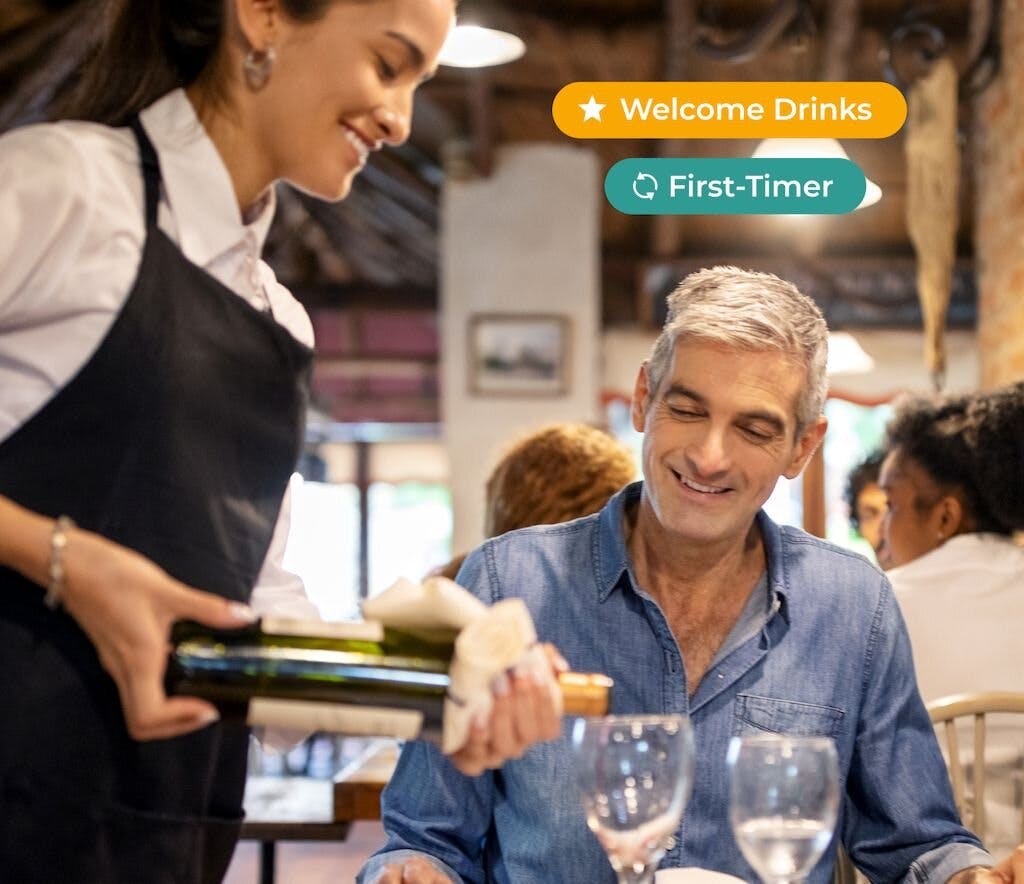
A restaurant CRM pulls everything you already know about your guests and puts it in one place. In doing so, it drives revenue and helps to reduce no-shows, increase repeat visits and grow guest spend.
Whether you run a 30-seat neighborhood spot or a multi-venue group, the right CRM lets you operate like a bigger team without hiring one. This guide walks through seven benefits that tie directly to revenue, retention and efficiency, plus what to look for so you pick a platform that pays for itself.
What exactly is a restaurant CRM system?
A restaurant CRM connects who your guests are with how they spend and visit, then makes that information usable across your front of house.
Instead of guest details scattered across your reservation book, POS and email platform, a CRM pulls everything into a single profile per diner, storing contact details, visit history, spend, preferences and feedback.
Stronger systems go further: auto-segmenting guests like "first-timers" and "VIPs", triggering personalized email and SMS campaigns.
The real difference from a standard database is actionability:
- Tag VIPs and regulars automatically
- Auto-enroll lapsed guests into win-back campaigns
- Surface guest notes to staff at the moment of arrival
For busy hospitality teams, that's more personalized service and smarter marketing without more manual work between services.
Why these CRM benefits matter for operators in 2026
Guest data is only useful if your team can turn it into revenue. A restaurant CRM does that by triggering higher spend and repeat visits, using personalized offers, win-back and review campaigns.
A SevenRooms Industry Trend Report found that 77% of operators know personalization boosts loyalty but struggle to deliver it consistently. The reasons are familiar: guest notes scattered across systems, thin marketing support and teams that are already stretched too thin.
A CRM closes that gap by turning data you collect every night into targeted outreach that runs automatically once you've set it up.
In short, the right system ties outcomes to real numbers: incremental covers, higher revenue per guest and fewer no-shows.
6 revenue‑boosting benefits of a restaurant CRM
1. More direct repeat visits from your best guests
A restaurant CRM helps you identify your most valuable guests, then brings them back with targeted marketing outreach instead of one-size-fits-all blasts. According to SevenRooms' 2026 data report, repeat diners are 27% more profitable than first-time diners, and personalized automated emails drive 16x more revenue per email than mass sends.
A strong CRM builds specific segments: "visited 3+ times in the last 6 months," "high spend per cover," "hasn't visited in 90 days." From there, marketing automation triggers targeted emails to those guest profiles to bring them back, keeping every campaign grounded in true customer behavior.
Over time, focused retention work builds a reliable base of direct bookings you can forecast against. Linking these efforts to your guest data and segmentation strategy keeps every campaign grounded in real behavior.
2. Higher revenue per cover through smarter personalization

A restaurant CRM with automated tags acts as a personalized upsell engine by giving staff richer context on every guest before they even arrive. Unified guest profiles can include spend data, visit frequency, order history, dining preferences, dietary restrictions and notes from previous visits, while automated tags help surface patterns like “VIP,” “wine enthusiast,” “anniversary diner” or “frequent delivery guest” automatically.
Where this shows up on the P&L:
- Higher average check through relevant, immediate suggestions
- Stronger attachment rates on premium experiences and add-ons
- Guest-led upsell driven by relationship, not scripts
3. Fewer costly no-shows and late cancellations
No-shows and last-minute cancellations are among the most costly disruptions a restaurant faces: lost revenue, wasted prep and a floor you can't resell. A restaurant reservation system and CRM data give you the tools to protect against them before service starts.
The system identifies guests who “no-showed” or cancelled late, then automatically sends a win-back campaign or rebooking prompt. You can set stricter rules for peak hours or lighter-touch policies on slower nights.
Start here:
- Card capture or deposits for Friday and Saturday sittings
- Automated reminders 48 and 24 hours before the booking to cut no-shows
- Waitlist management best practices to keep your floor optimized
- Separate confirmation flows for new guests versus regulars
4. Stronger review volume and online reputation
A restaurant CRM automates review requests at the right moment, right after the visit, when the experience is still fresh.
Every guest gets a survey or review prompt without your team initiating follow-up. Those responses feed directly into the guest profile, so you can see whether a diner is a consistently positive or negative reviewer and tailor how you communicate with them at every future visit.
Guests with a great experience can be nudged toward public review platforms. Guests with a complaint are invited to share privately, giving you a chance to recover sentiment before it goes public.
What a well-configured review flow:
- Increases review volume consistently across every service
- Surfaces recurring issues by location or service period before they compound
- Protects your public reputation by handling dissatisfied diners off-platform, before issues become common restaurant complaints
5. Always-on marketing and consistent guest recognition across every venue
Most restaurant teams don't have a dedicated marketer. A restaurant CRM fills that gap by running campaigns automatically, so you're not squeezing it in between services.
Once your segments and templates are configured, the system takes over. Automated emails fire based on guest behavior, delivering consistent, targeted outreach whether you're at full capacity or flat out during a busy weekend.
While the system handles personalized campaigns like birthday offers and win-back sequences, the shared profiles unlock VIP tags and branded promotions.
With one strong CRM system, your marketing, guest portfolio and leadership performance data is compiled in one place
6. Data-driven decisions that reduce operational guesswork
A restaurant CRM connects guest profiles, reservations and revenue management into a single decision-making tool. These reports highlight diners that drive the most value, which campaigns deliver incremental covers and where you're losing people before it shows up on the P&L.
Unlike a POS report, it ties revenue back to real people, so every insight points to a specific action.
A CRM can tell you:
- Which days and dayparts attract your highest-value regulars?
- Which campaigns shifted existing bookings versus generating new ones?
- Which segments are growing and which aren’t?
Connecting revenue to real people rather than anonymous transactions is what separates restaurant analytics from basic POS reporting.
How SevenRooms delivers these benefits in one platform
SevenRooms' CRM unifies guest data, reservations, marketing and feedback in one platform, so all benefits run from a single system. Direct bookings give you full ownership of your first-party guest data, and for high-volume venues, no per-cover fees mean more revenue stays with you.
- Automatically build rich guest profiles with over 100 unique data points on each of your diners.
- Reduce no-shows with smarter deposit and reminder policies.
- Reach key segments with always-on campaigns that run automatically.
- Send post-visit surveys after every service.
Turn every visit into a relationship that drives the next one
See how SevenRooms' restaurant CRM unifies guest data, automation and review management in a single platform.
Restaurant CRM benefits FAQs
Is a restaurant CRM right for a new restaurant?
Yes. Building a guest database from day one turns every early visitor into a returnable asset. Review requests, birthday journeys and first-visit follow-ups start compounding value from the first cover.
Does a restaurant CRM help with reviews?
A restaurant CRM drives more reviews and higher-quality ones by automating the timing and routing of feedback. The system sends post-visit surveys and review prompts automatically after each meal, when the experience is still fresh. Positive experiences can be routed toward public review platforms, while negative feedback is surfaced privately so your team has a chance to respond and recover the experience before it becomes public.
Does a restaurant CRM work for all venue sizes?
A CRM delivers value at every scale, just differently. For multi-unit operators, it's operational infrastructure: your team recognizes someone at one site who visited another thanks to centralized profiles. Group-wide and venue-specific campaigns run from a single place, and leadership tracks performance across the portfolio without manual data consolidation.
For independent restaurants and small groups, the gains come from automation: win-back flows, no-show reduction and review prompts handle repetitive work in the background, freeing owners and GMs to focus on service and strategy.
What should restaurants look for when choosing a CRM?
First-party data ownership should be non-negotiable: you need to own your guest profiles, not rent access to them from a platform. Look for deep integration between reservations, marketing and feedback so data flows automatically rather than requiring manual exports.
Additionally, look for automation capabilities, specifically win-backs, review prompts and segmentation. In terms of pricing, factor in per-cover fees: a lower base cost can get expensive fast at high volume, while a flat-fee model protects margin as covers grow.
